Fans under 65 know and love Sebring but for those of us who were around, Sebring is the Holy Grail. Sebring was THE race, it was where all the best of the US came and slowly the best in the world came to this sleepy town in central Florida. The SCCA and Cal Club had great cars and drivers but there was no place but Sebring where the latest cars, the international drivers would come. Even the early USGP F1 races paled when compared with the 12 hour. There are thousands of car photos, what we bring you today are the scenes, the faces, what it looked like and what you might see if you had been lucky enough to have been there. I hope you enjoy this inside look at wonderful Sebring.
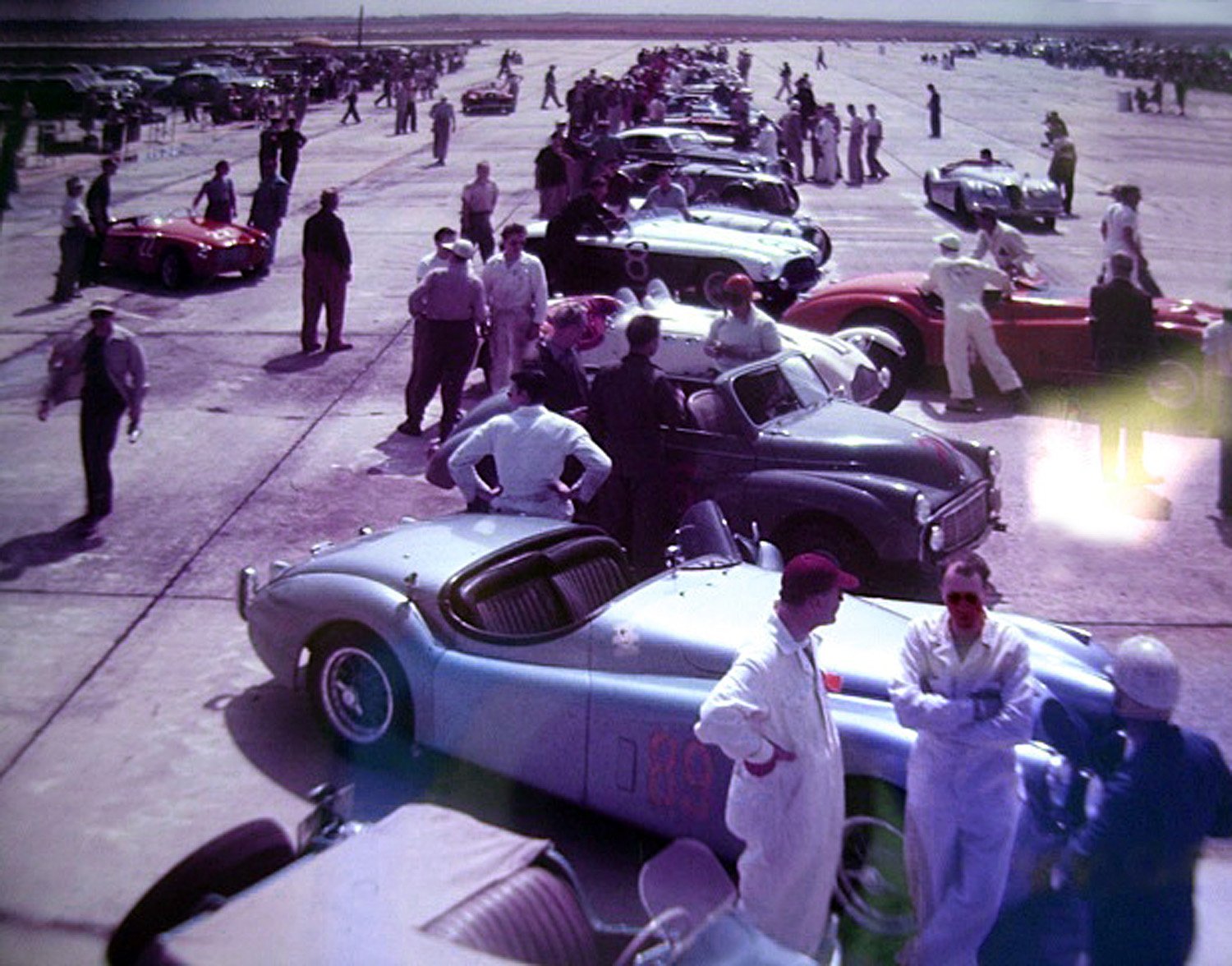
1952 Sebring grid. The #89 Jag XK120 of Charlie Wallace and Dick Yates finished 6th. #26 Morris Minor won the sports 1100 class. The #11 Allard and the Bill Spear, Briggs Cunningham #8 Ferrari failed to finish.
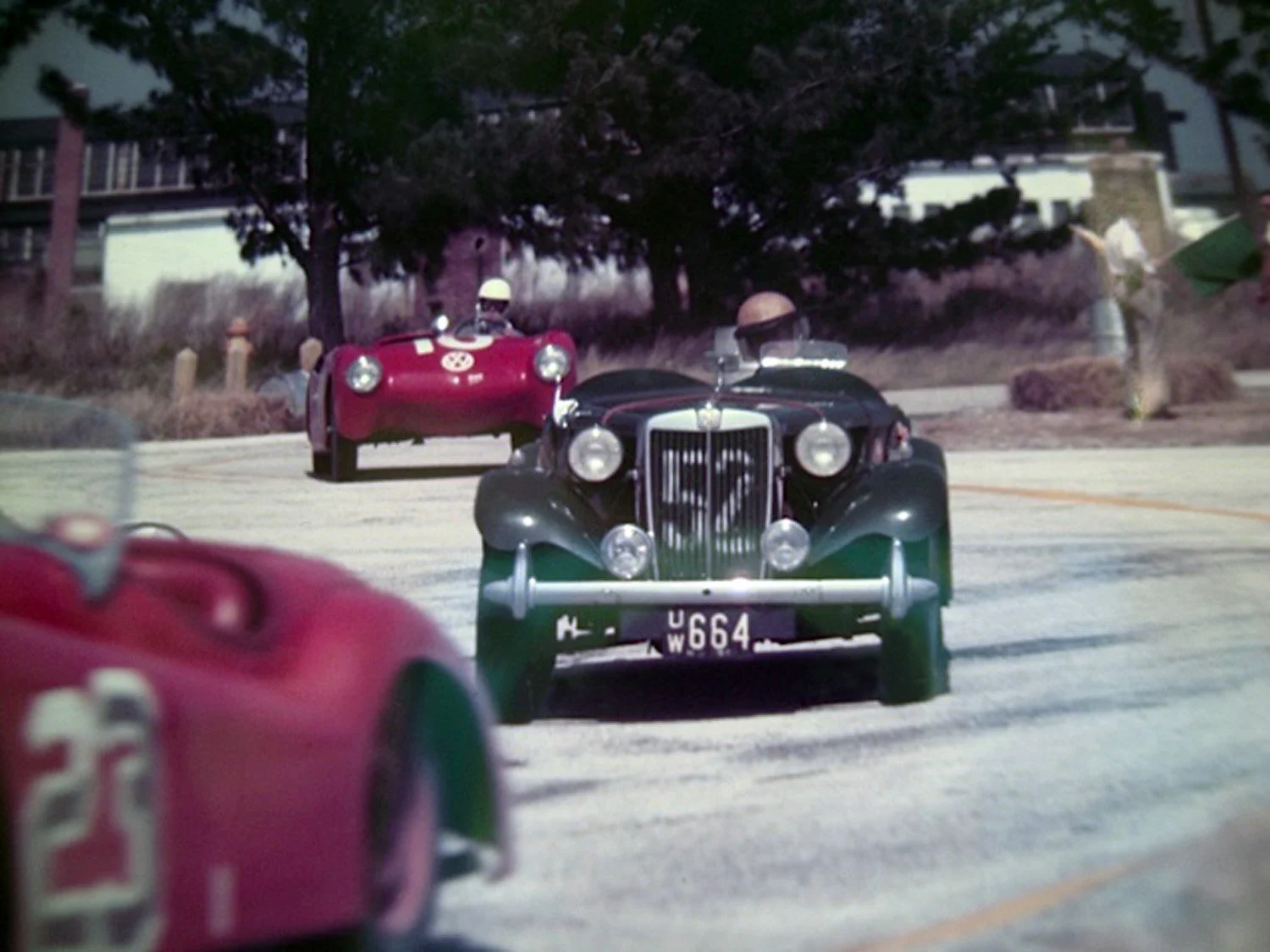
1952: We get a glimpse of the red #23 Jag that finished 2nd leading Walt Hansgen in his #52 MGTD. The red VW special of the Brundage brothers finished 11th just behind Hansgen. The Brundage family went on to start Brumos Porsche.
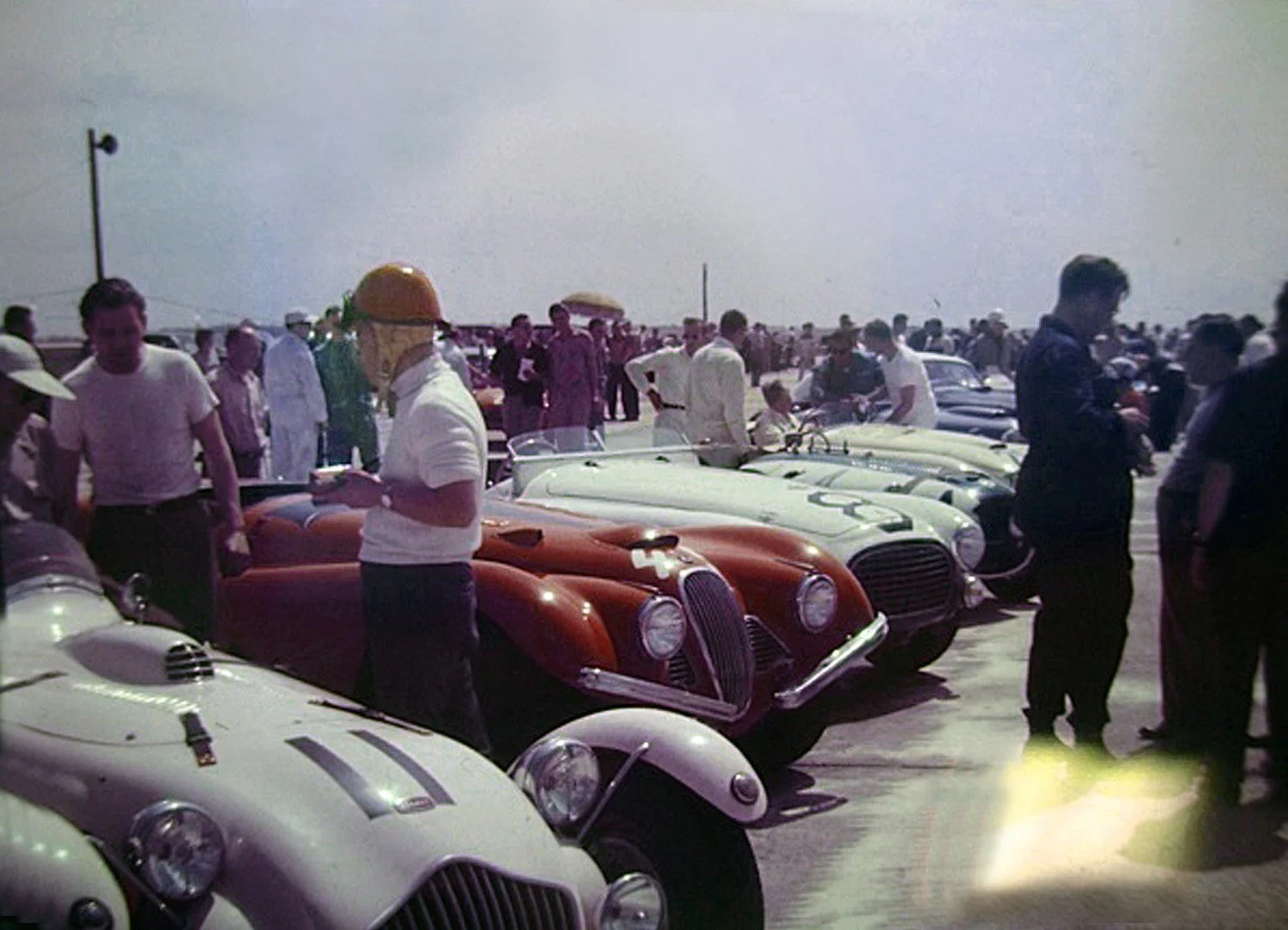
1952: A close look at the grid. The Grier-Collins Allard lasted abput half of the 12 hours, the red Jag of McDonald-Kennedy was also a dnf when it crashed over some hay bales despite its special air vents and bumpers. You can see the front of the Spear-Cunningham Ferrari America that did not finish.
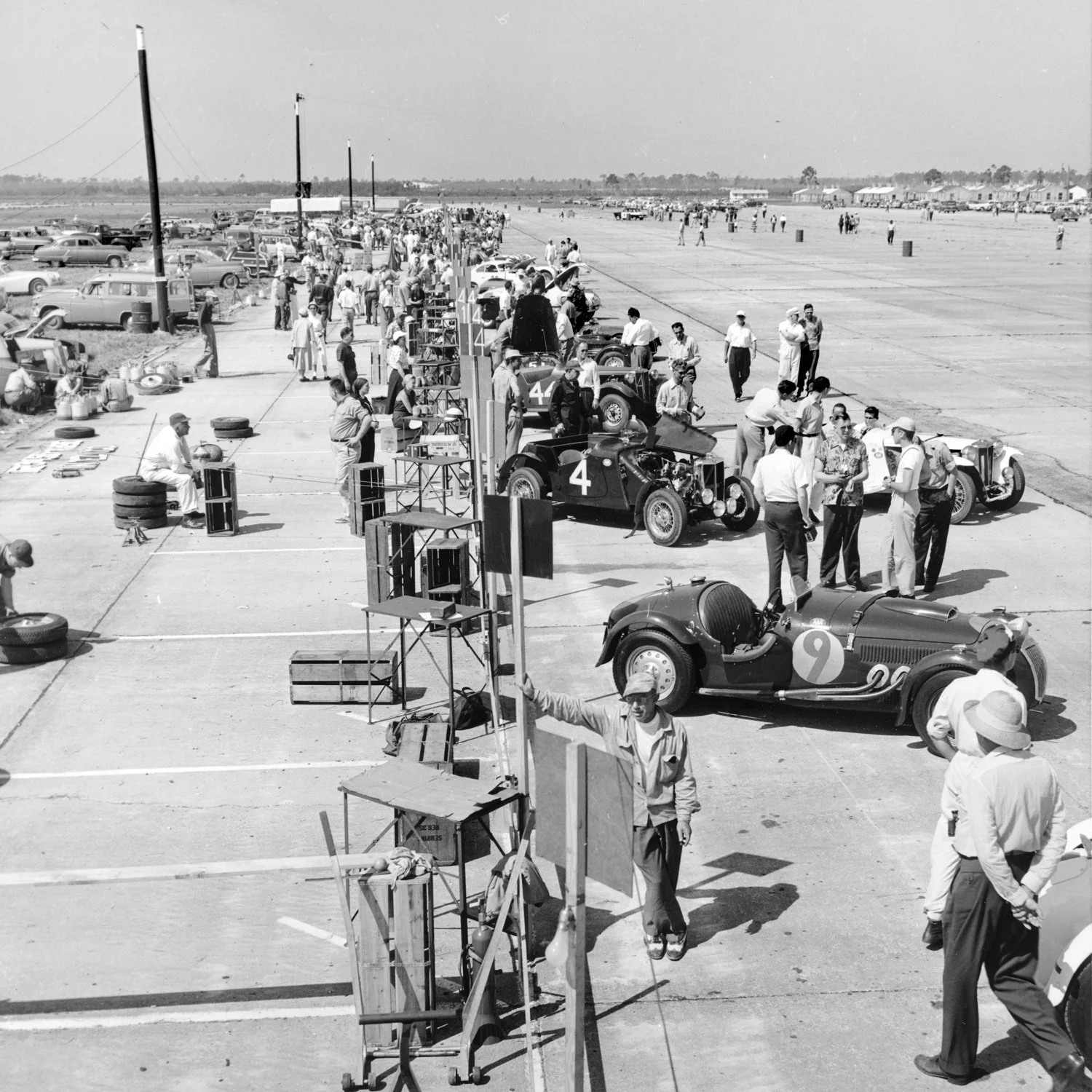
1953 and the field has 81 cars entered. The #9 Fraser-Nash replica made only 2 laps before blowing up. A similar car had won the 1952 race. Dave Ash and Frank Ahrens #4 MG special finished 13th and #44 driven by comedian Fred Allen finished 19th.
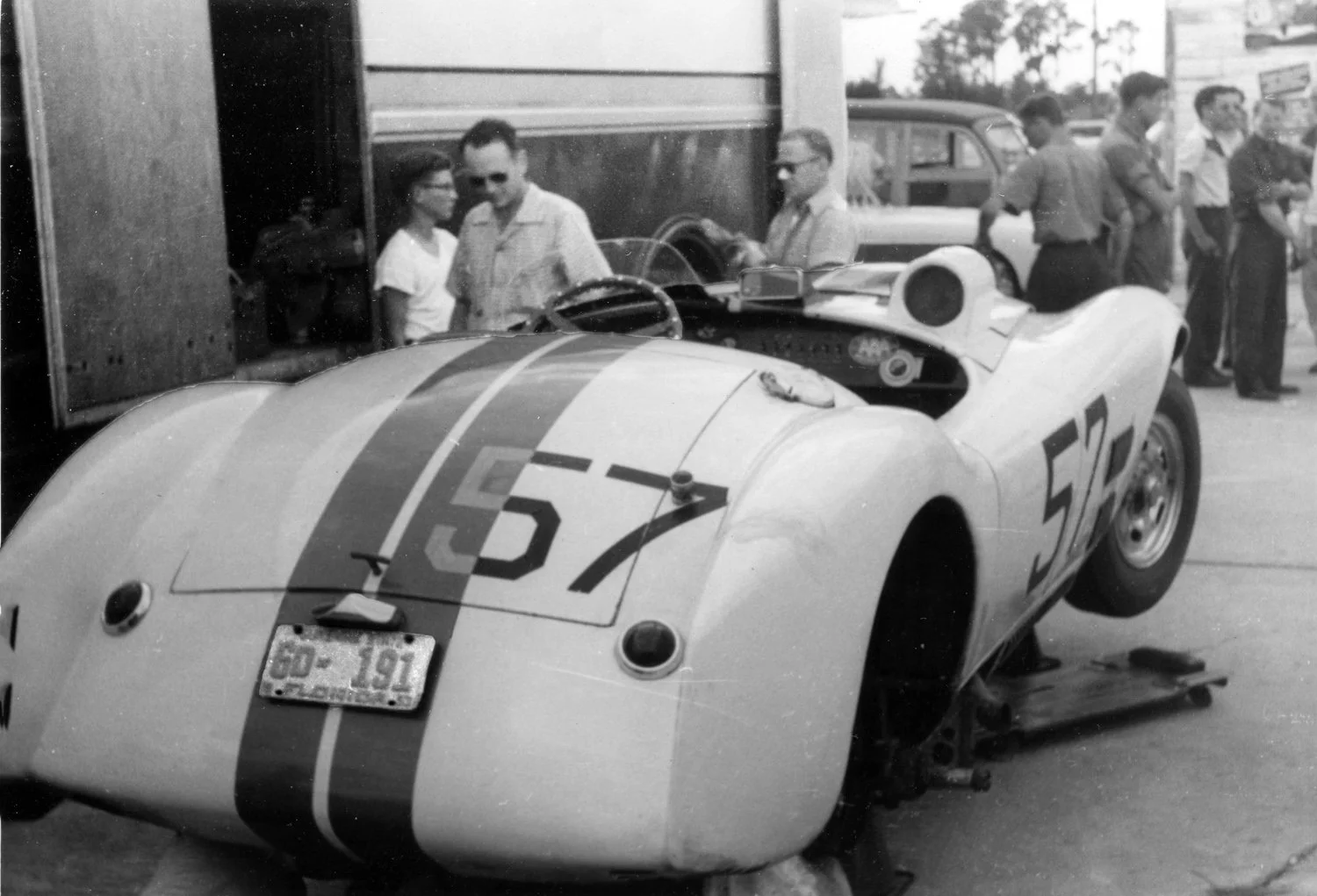
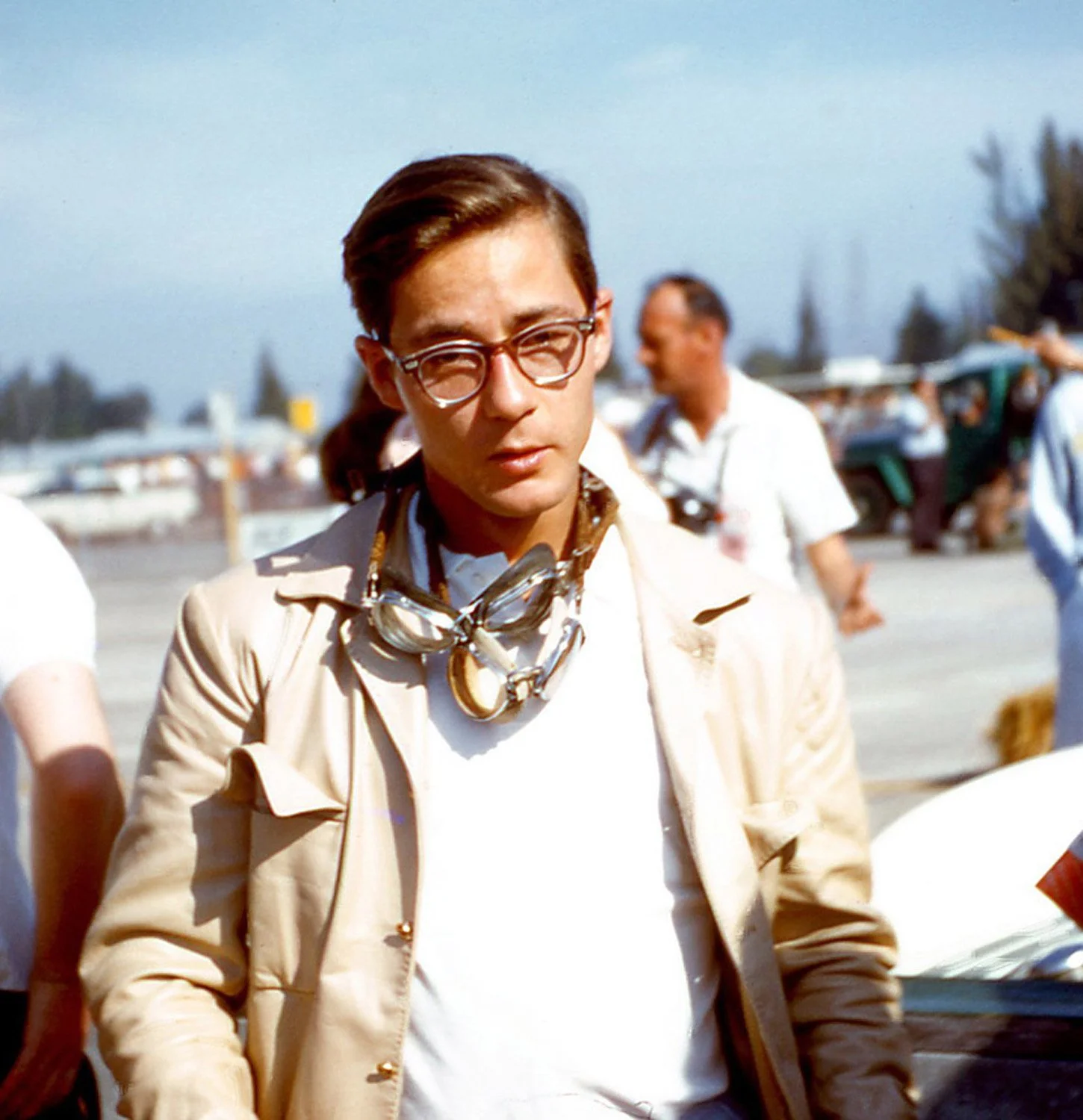
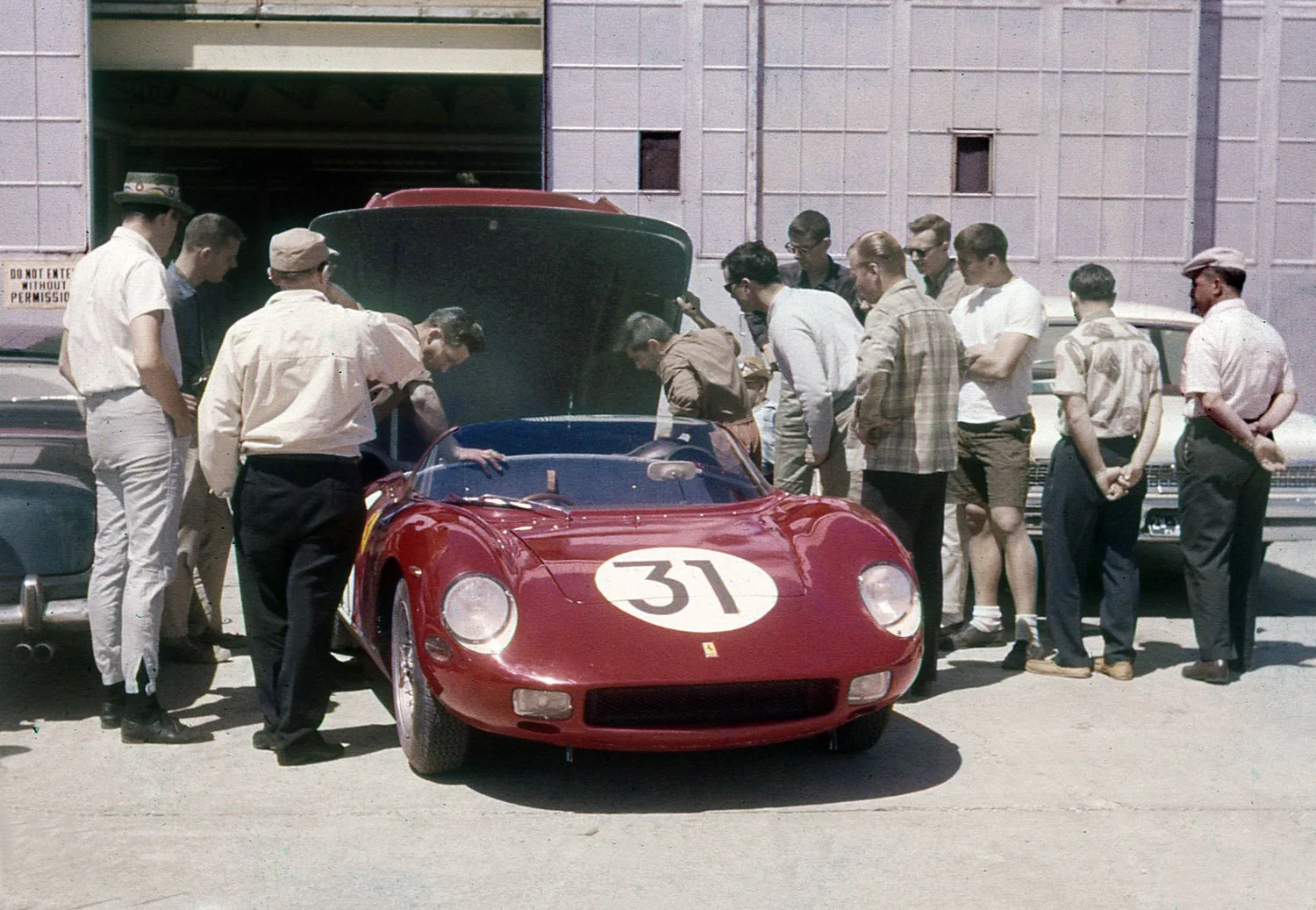
1953 Sebring winner is the #57 Cunningham C4R driven by Phil Walters and John Fitch. Note the Florida license plate and Phil Walters with his aviator sunglasses looking over the work. Did they drive the car up from Palm Beach?
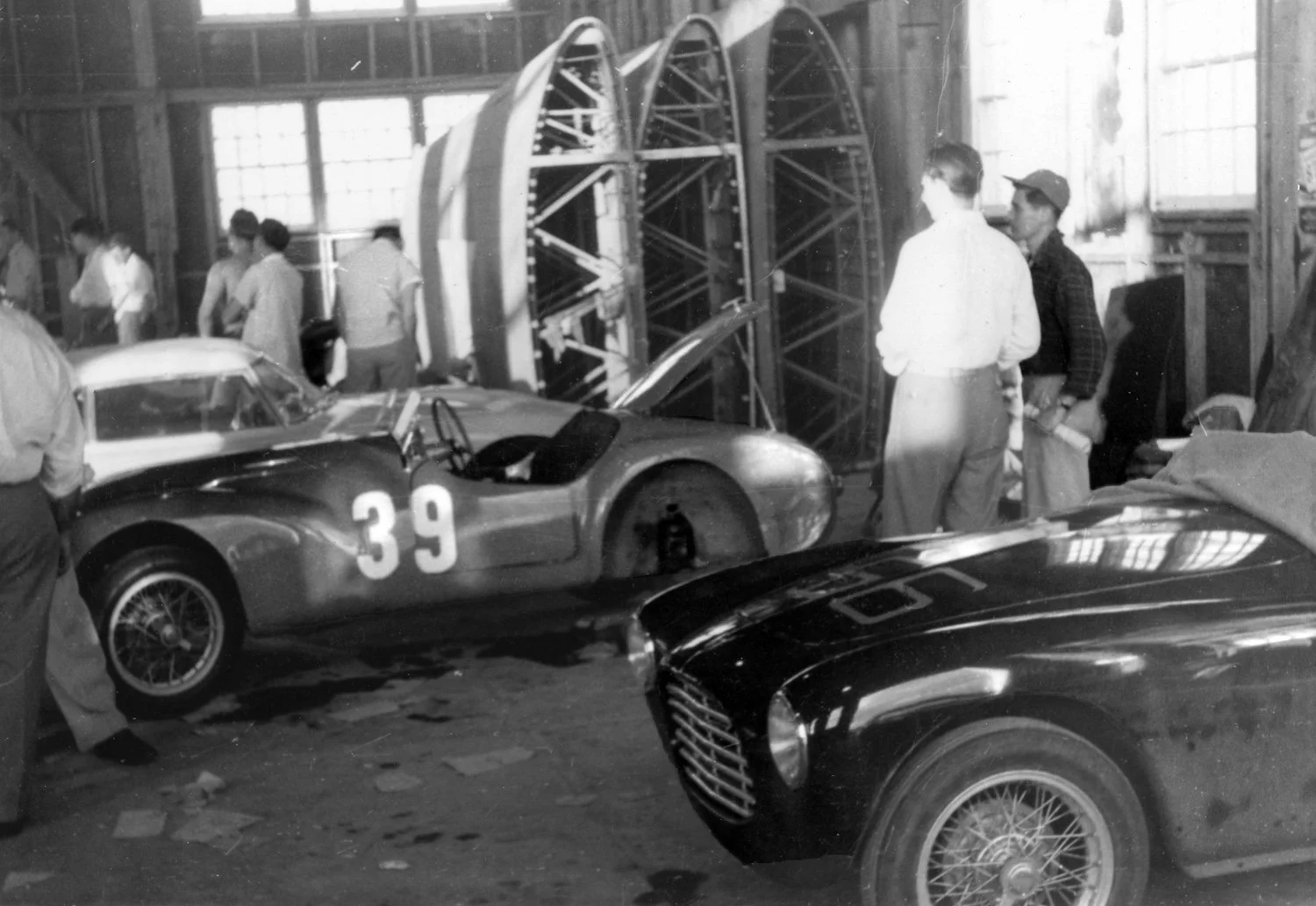
1953: Tom Scatchard & Henry Wessells #56 Siata and Otto Linton and John Edgar’s #39 Siata Amica special sit in a hanger where you can see 3 airplane wing pieces stored behind. The air base was now the Sebring regional airport and remained active.
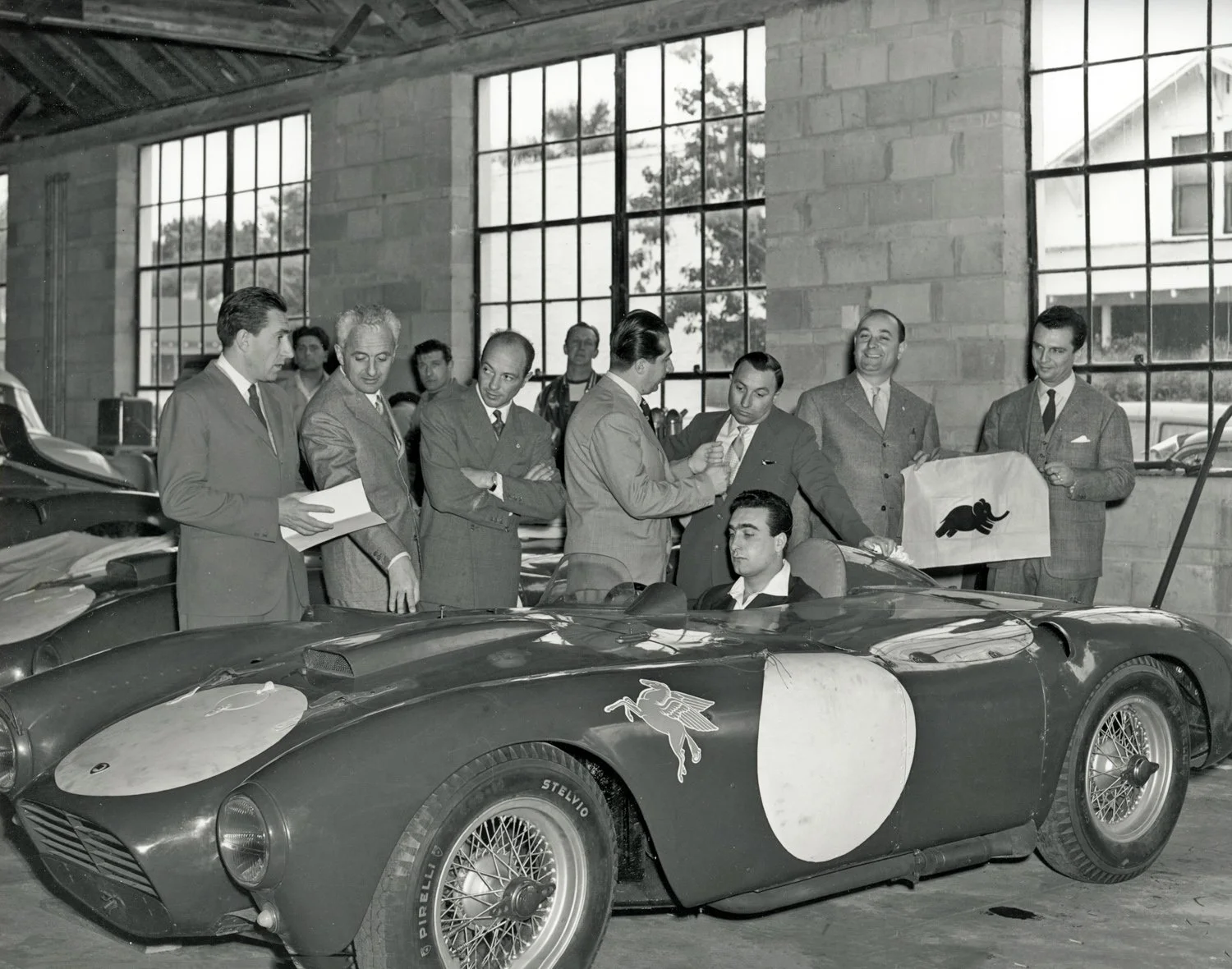
1954: Big news is Lancia has brought 4 of its D4 race cars with an all star lineup. 2nd from L is Luigi Villoresi, Robert Manzon (arms folded), two time world champion Alberto Ascari with Gino Valenzano. Missing are Juan Fangio, Piero Taruffi and Porfirio Rubirosa. The Elephant flag was the logo of Lancia and represented Power, Determination and Victory. Only 1 car finished in 2nd behind a Cunningham C4R.
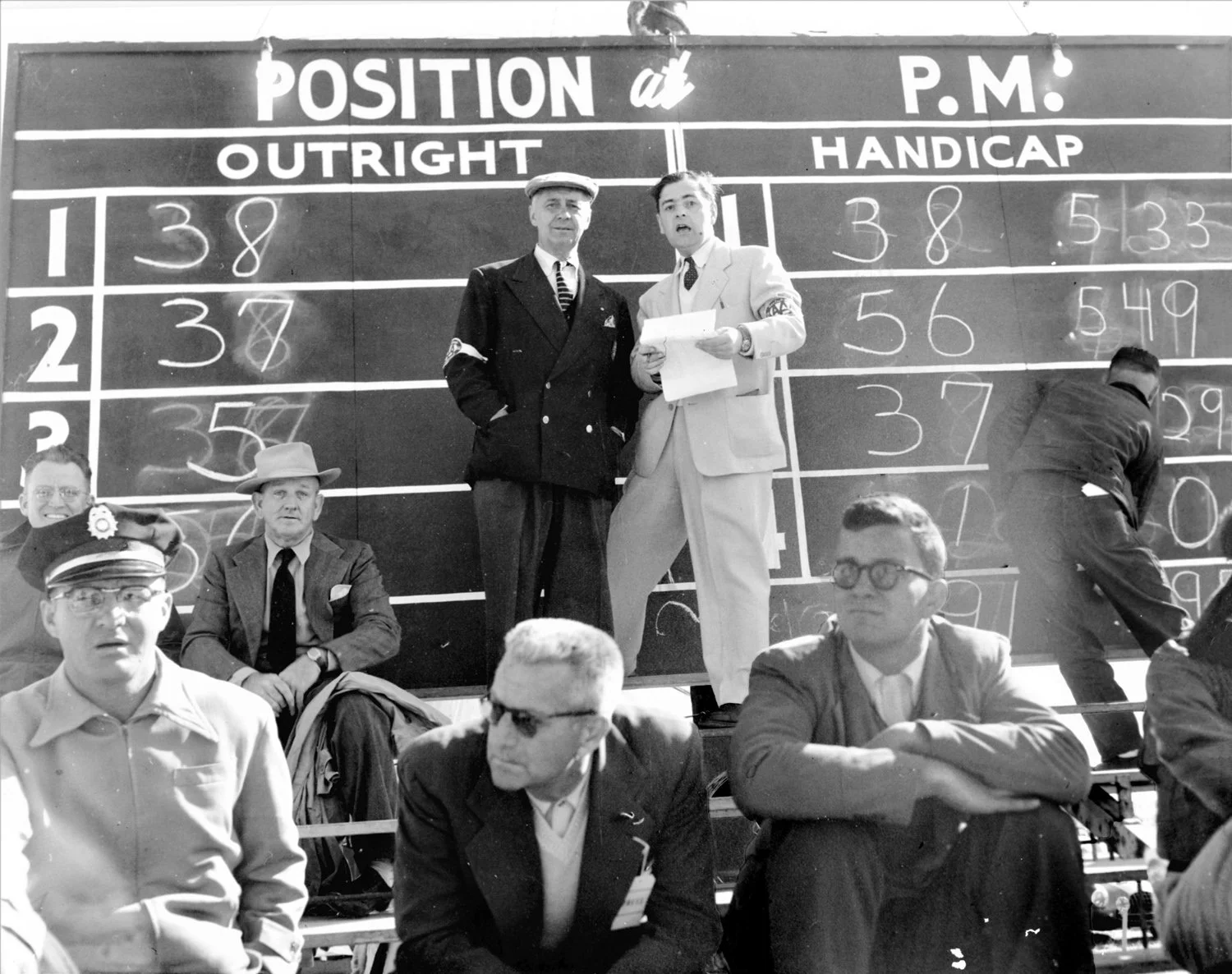
1954; Alec Ulman (always in jacket and tie) and Reggie Smith in front of the leader board. At that moment, two Lancias are leading with the Walters/Fitch Ferrari owned by Cunningham in 3rd. Note the #56 OSCA is shown 2nd on Index and they went on to win with Stirling Moss and Bill Lloyd.
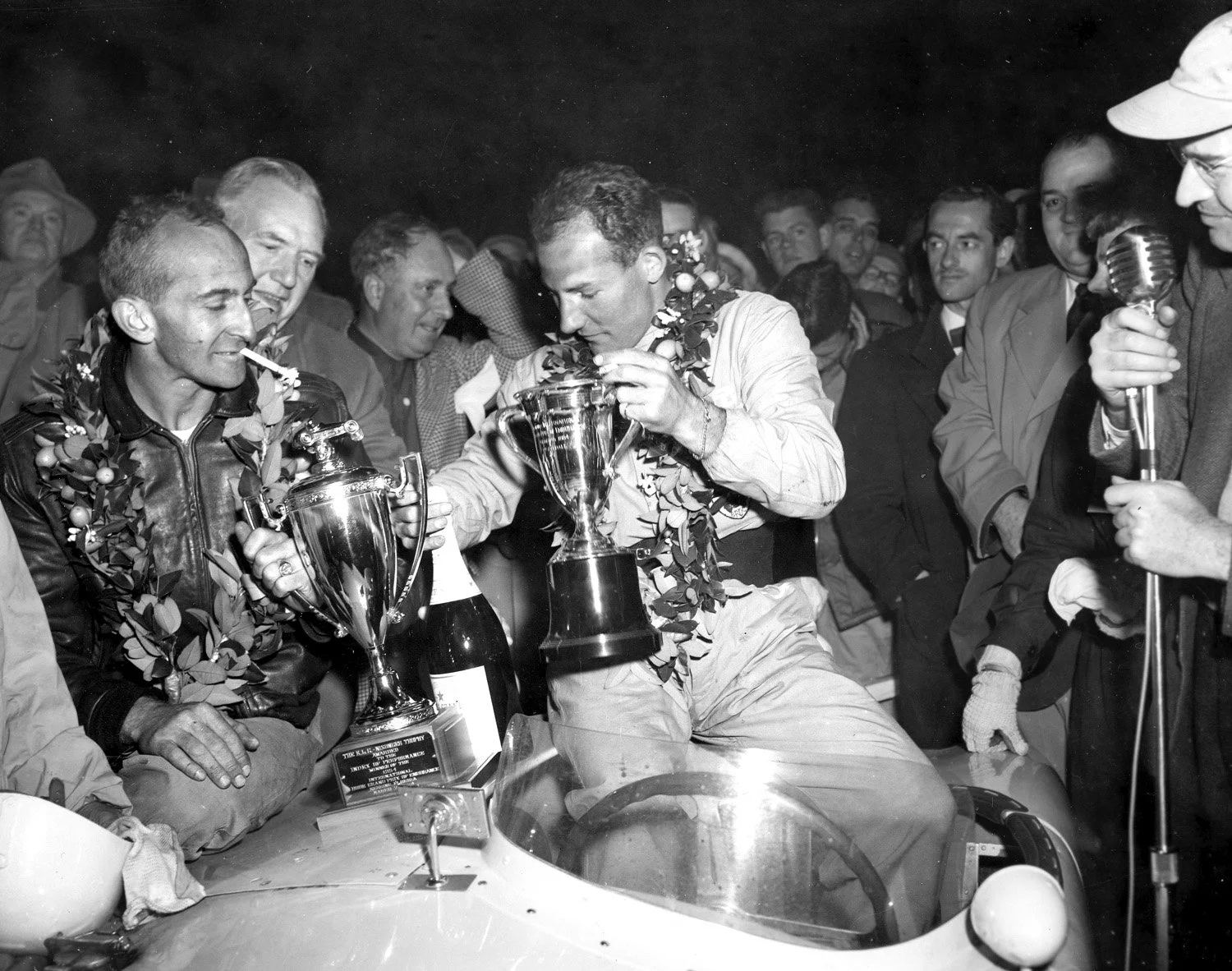
1954: Moss and Lloyd win in the Cunningham OSCA. Little known is the 1954 race was held on Sunday, not the typical Sebring Saturday. Only 1953-54-55 were held on Sunday.
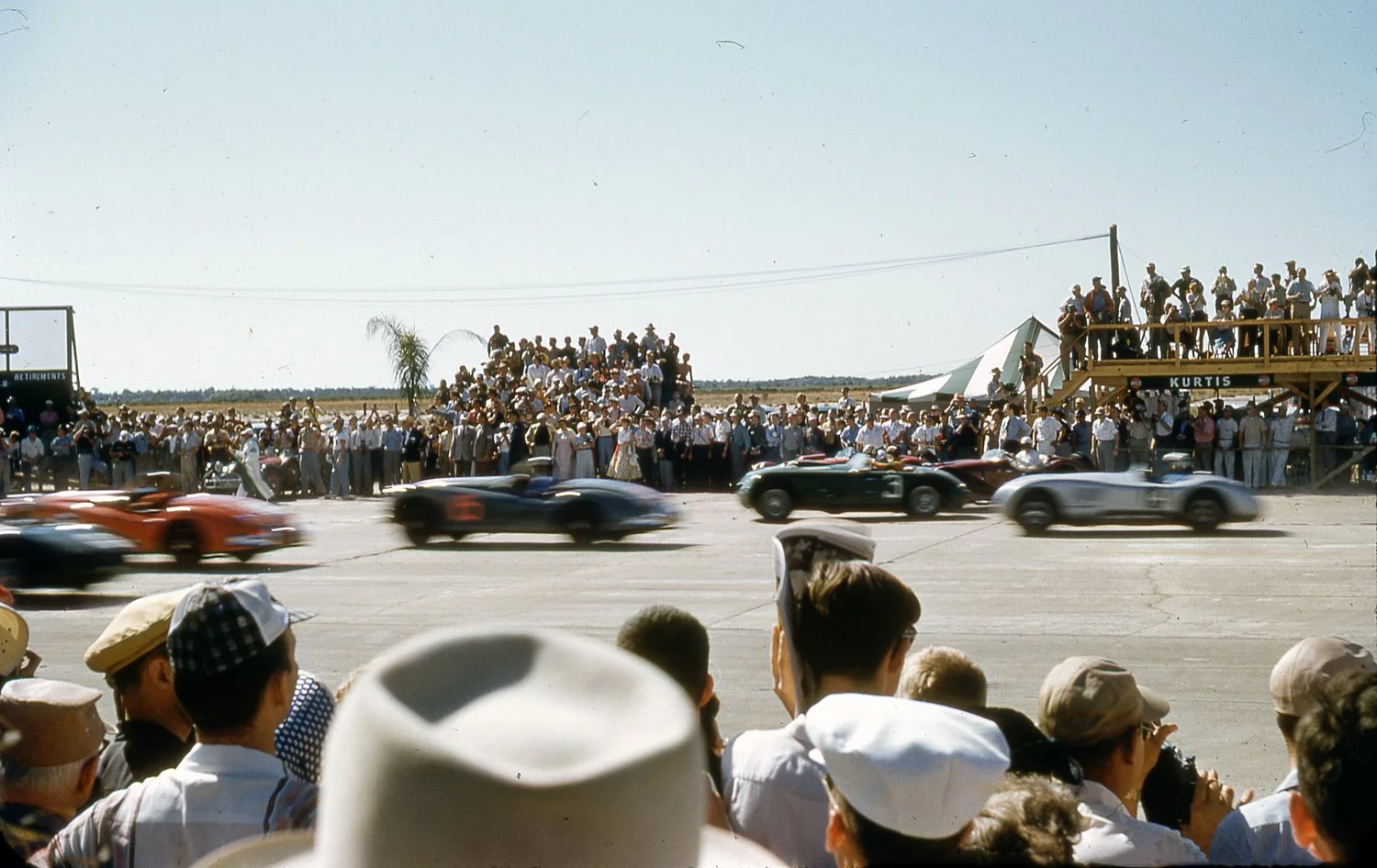
1955: The race starts. on a widened and somewhat newly paved circuit. This image shows what little infrastructure and spectator amenities there were. Notice as well nobody is wearing shorts. many women in dresses and men in jackets. A different time.
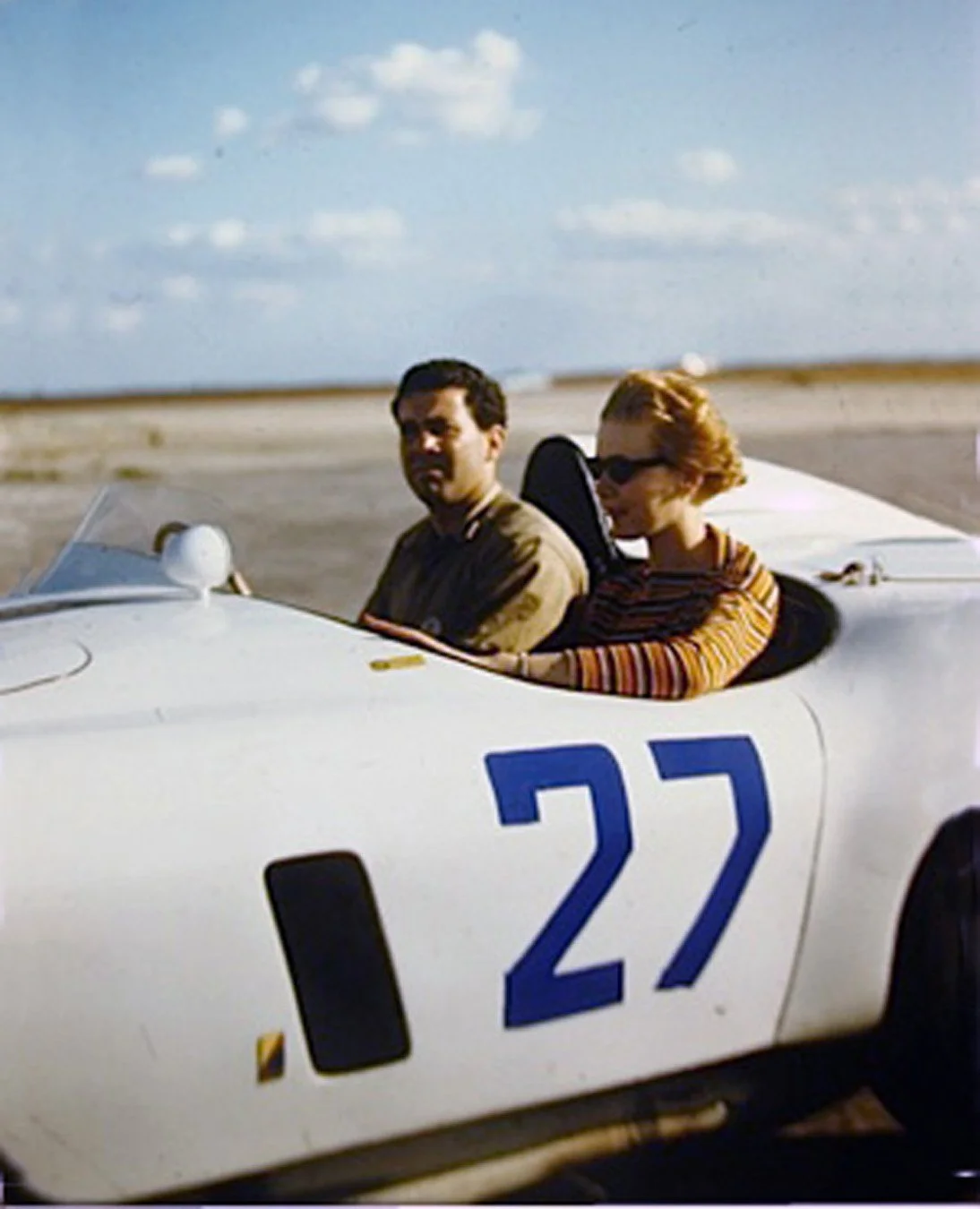
1955: Bob Said and friend in his 750 Ferrari Monza. Said had a very bad day as his race was finished when he collided with an ambulance on the 3rd lap that was sent out to assist a Renault driver who had flipped. At least 6 cars were flagged off the course when they started the race but had not qualified.
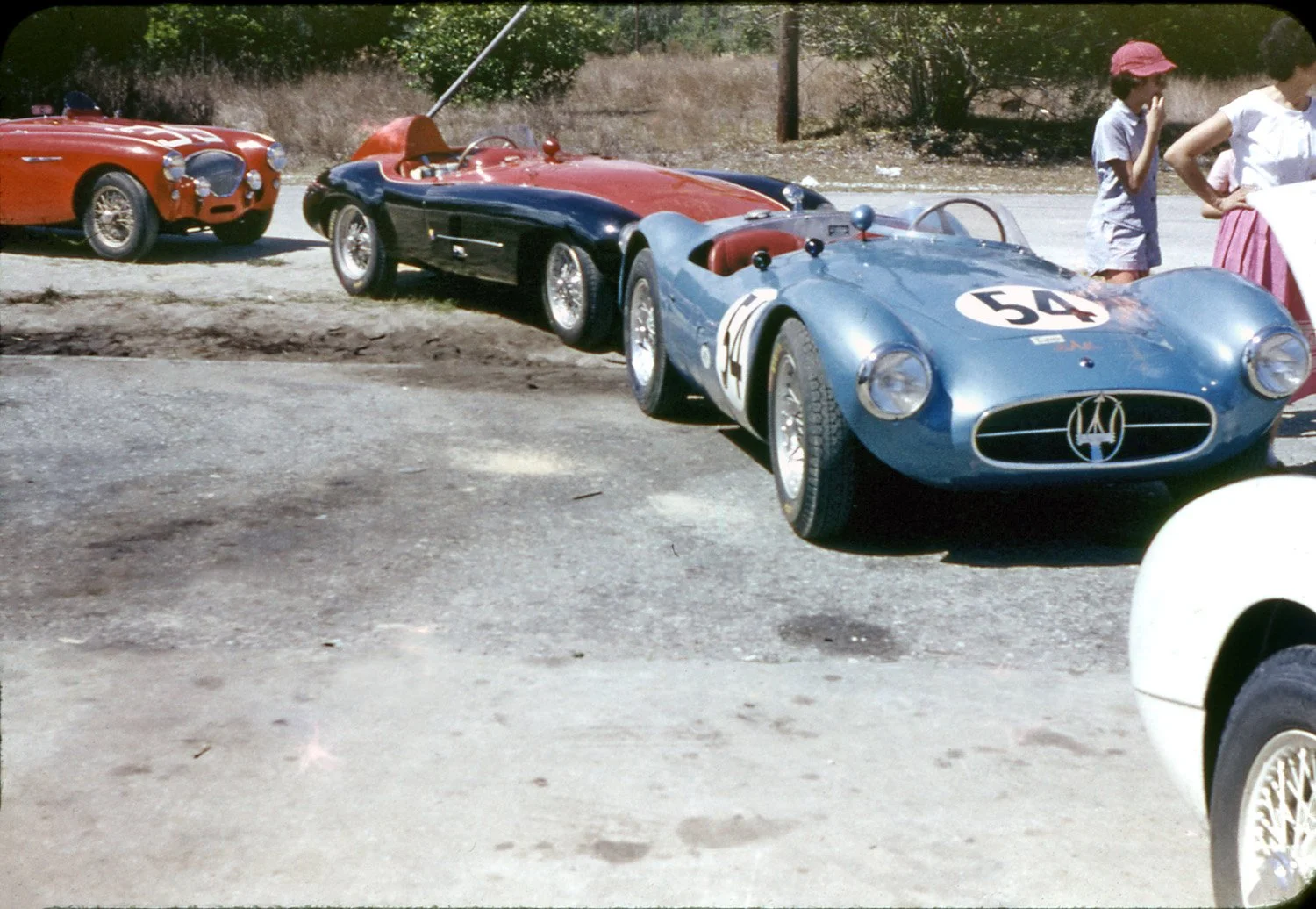
1955: The tech line includes the Maserati of Tom Friedman and Karl Brocken. The car was a 2 liter A6GCS but was stuffed with a 3 liter motor. The red Healey 100 was driven by Bill Wonder and Bill Wellenberg to 24th.
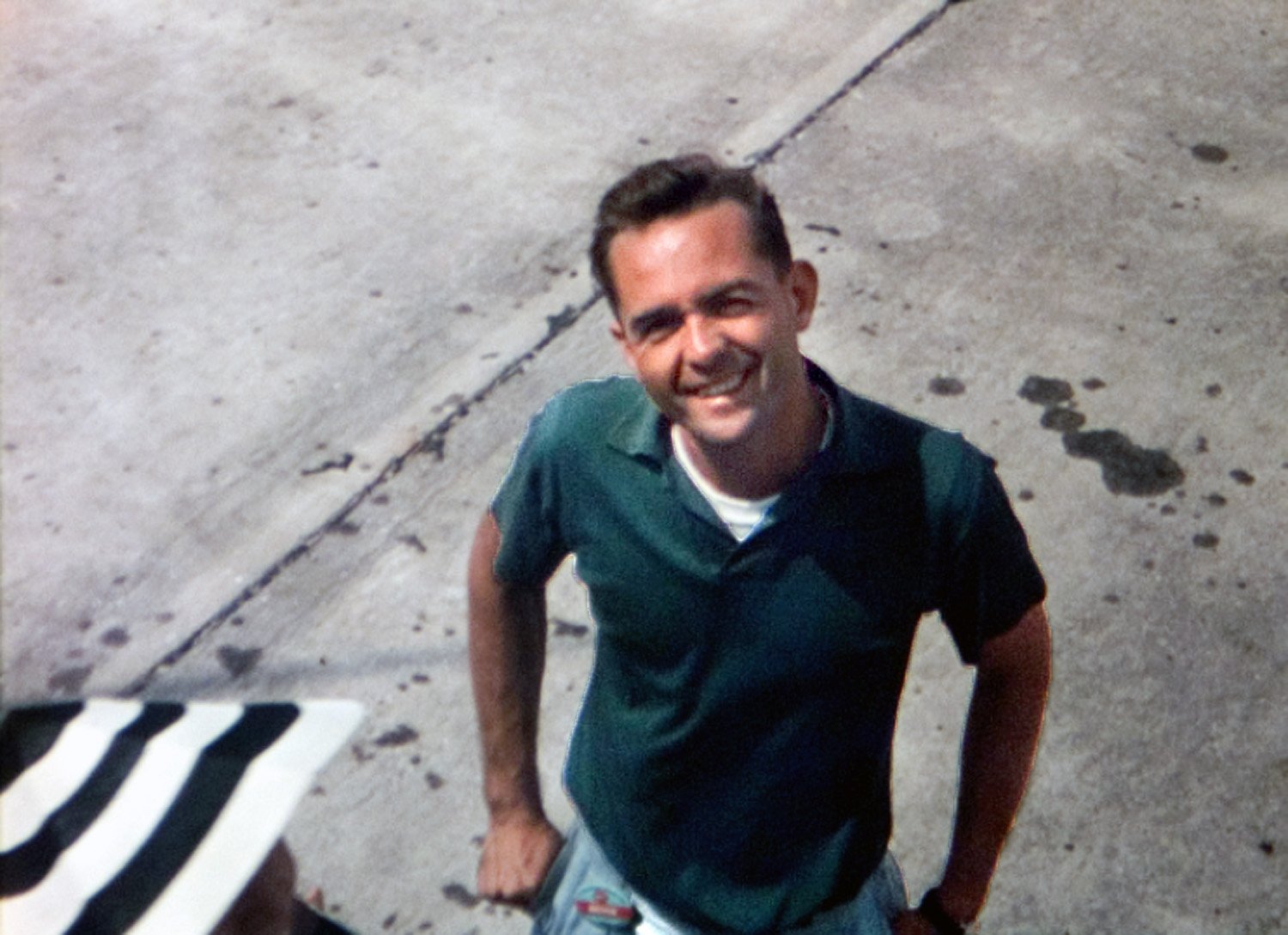
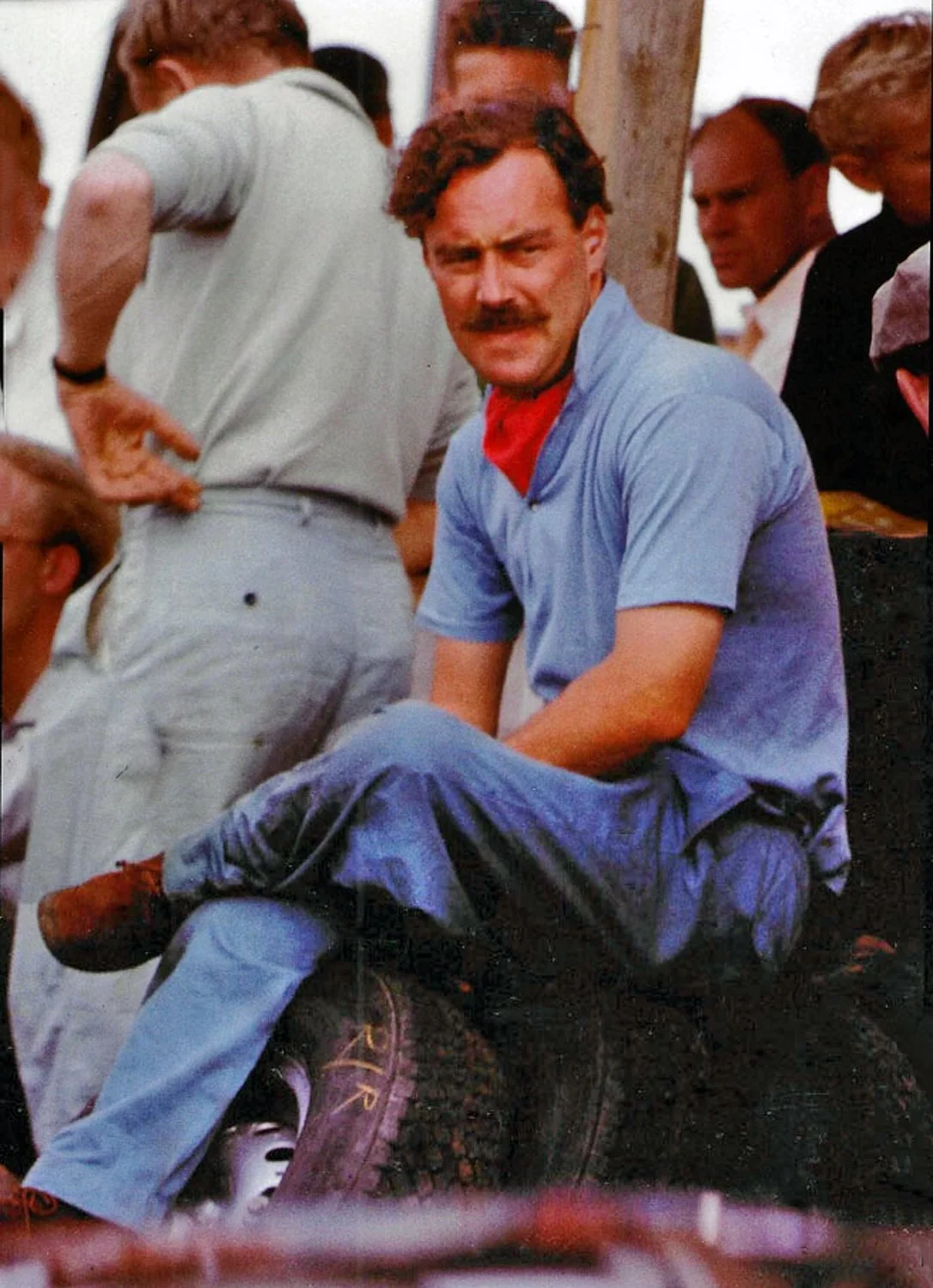
1956: Phil Hill looks up at California friend Jim Sitz wondering how the teen made it all the way to Florida. Hill had told him that if he wanted to be a serious journalist he had to get to Sebring. Sitz started the trip out of a small LA airport and made two stops before landing in Tampa and taking a bus to Sebring.
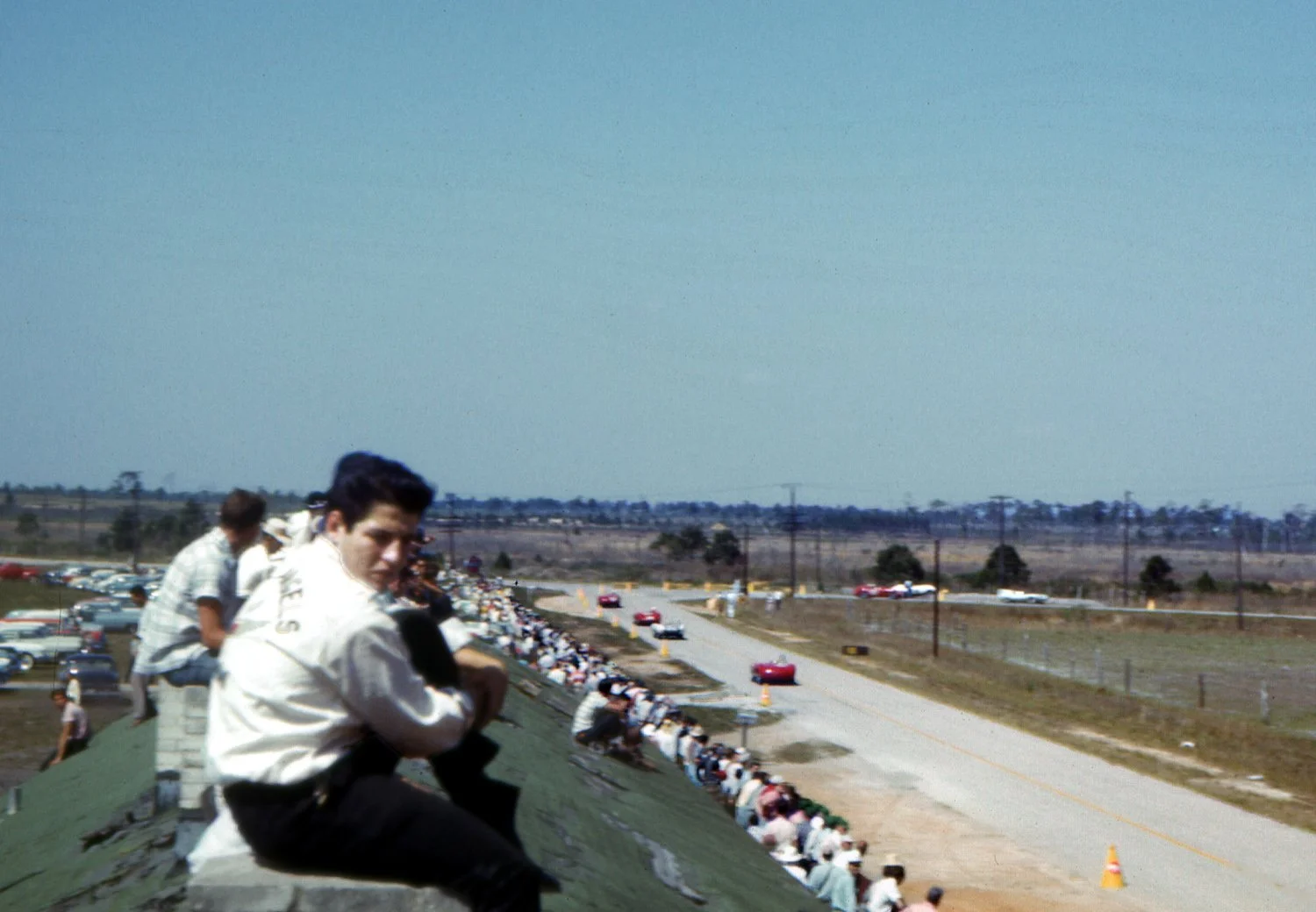
1956: Sebring spectators have always been creative. A bunch of folks climber the roofs of the old air force barracks to get a high view of the esses and the hairpin.
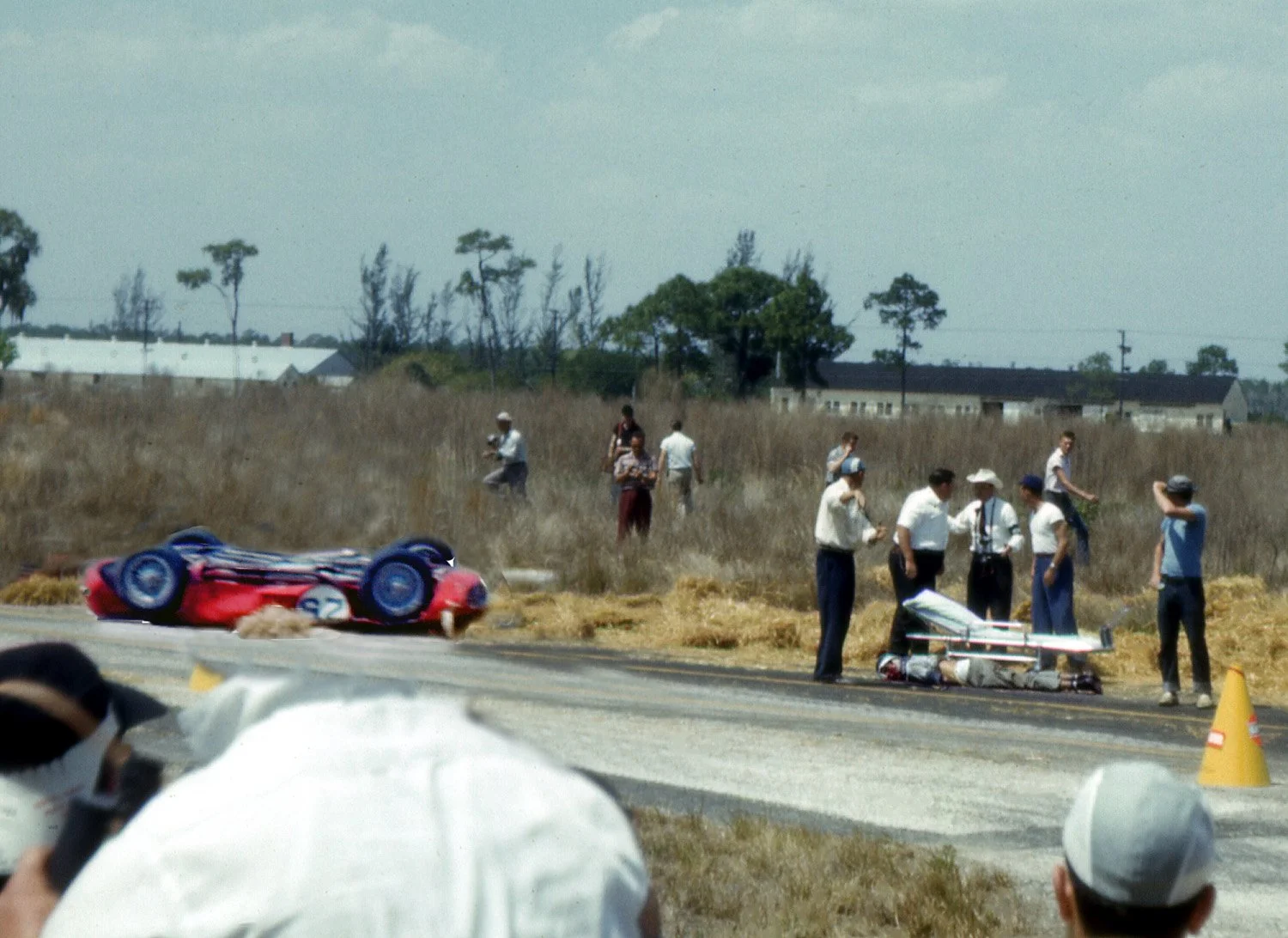
1956: Fun story. Carlos Menditeguy rolled his Maserati in the esses and was thrown out of the car. He lay face down not moving. Officials are trying to figure out what to do with this dead driver. Minutes later a nurse appeared and told them he was alive. Carlos was taken to the hospital, recovered and raced for many years after this accident.
1957: Famed French photographer and journalist Bernard Cahier chats with World Champion Juan Manuel Fangio in the Maserati pits. Fangio, with co driver Jean Behra, would win Sebring for the second consecutive year.
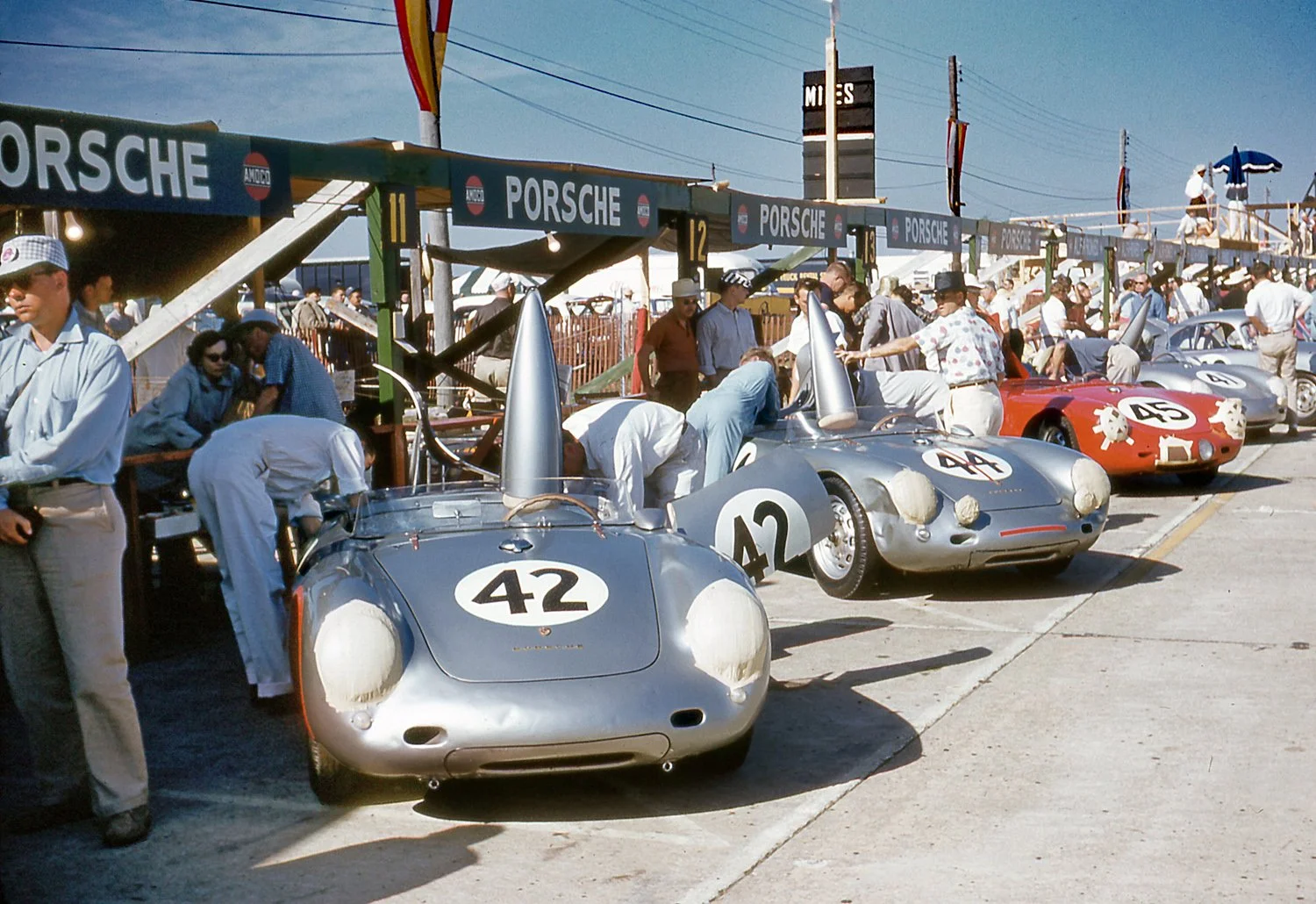
1957: Porsche is now very serious about the World Sportscar Championship but only brought 1 550RS #41 for Hans Hermann and Jack McAfee. The private 550RS Spyders of Art Bunker/Charlie Wallace (#44) and JP Kunstle/Ken Miles (red 45) beat the factory car and won the class for Porsche.
1957: Piero Taruffi sits in the GM hanger trying on Arkov-Duntov’s Corvette “mule”. Chevy built this car for drivers to test at Sebring. The car was quite good and Fangio, in 3 laps, lowered the track record in the car. Taruffi and John Fitch drove the real Corvette SS but it only lasted 23 laps.
1958: The amazing Archie Scott-Brown came to Sebring to drive his usual Lister-Jag but with Walt Hansgen in a Cunningham car. On lap 3, his car suddenly slowed and Olivier Gendebien ran up the back of Scott-Brown’s car and was literally stuck on top. Sadly Scott-Brown was killed later in the year at Spa.
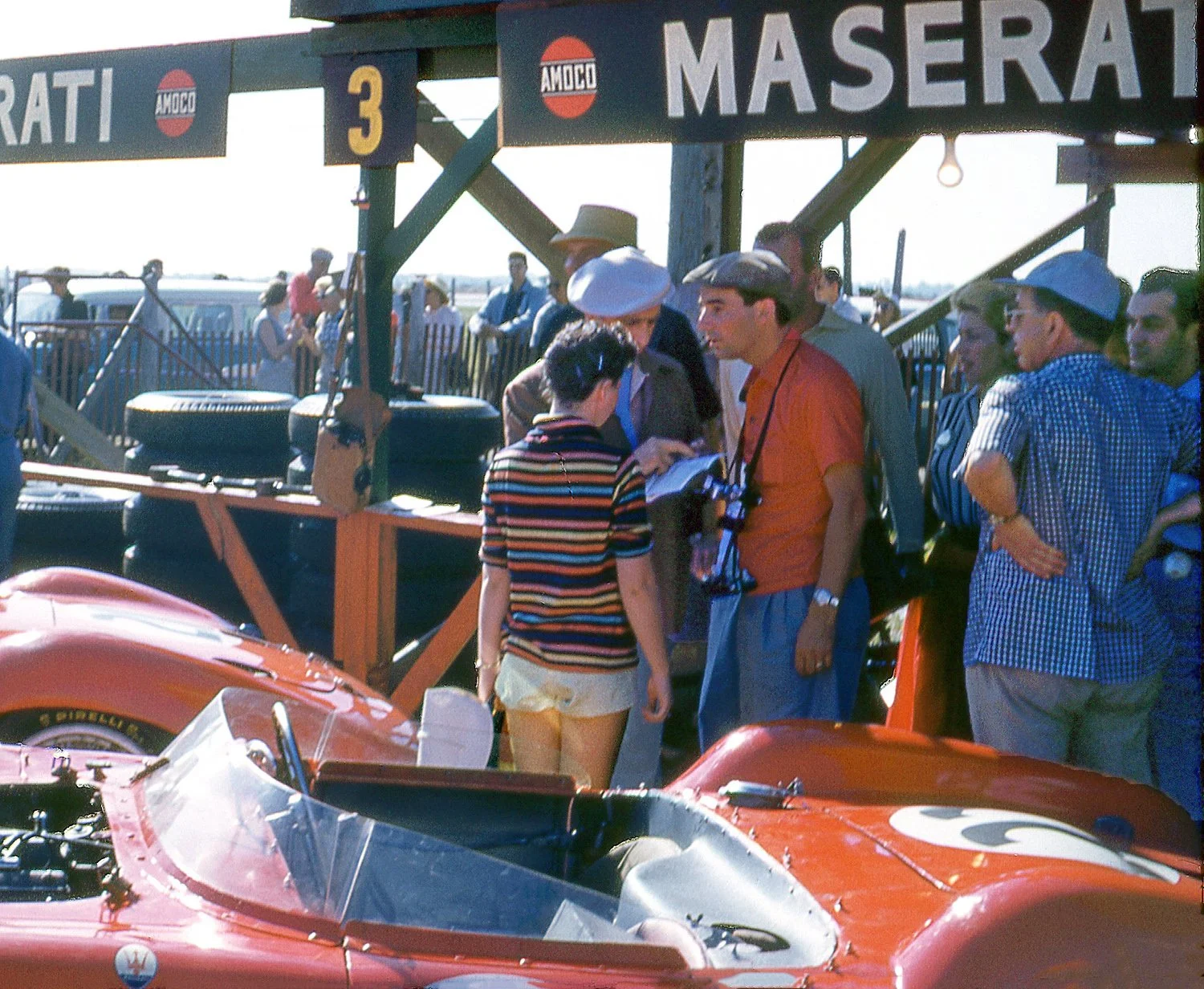
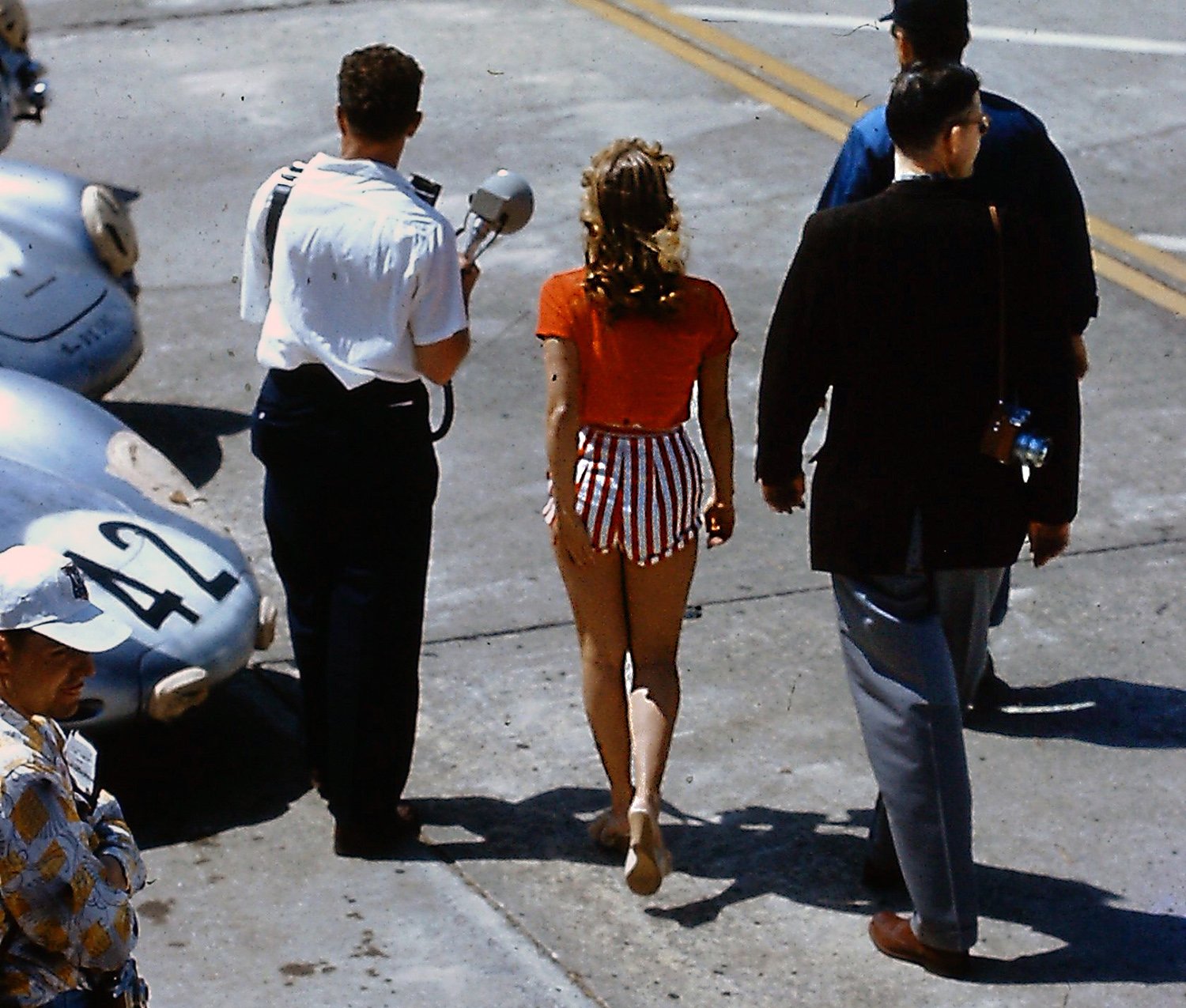
1958: The Sebring race queen attracted a lot of photographers in her lovely striped shorts as she strolls past the Jean Behra - Edgar Barth brand new Porsche RSK.
1958: Now America’s most important international sports car race Sebring had yet to upgrade its facilities. But nature still calls and at mid day the line is long to the men’s room.
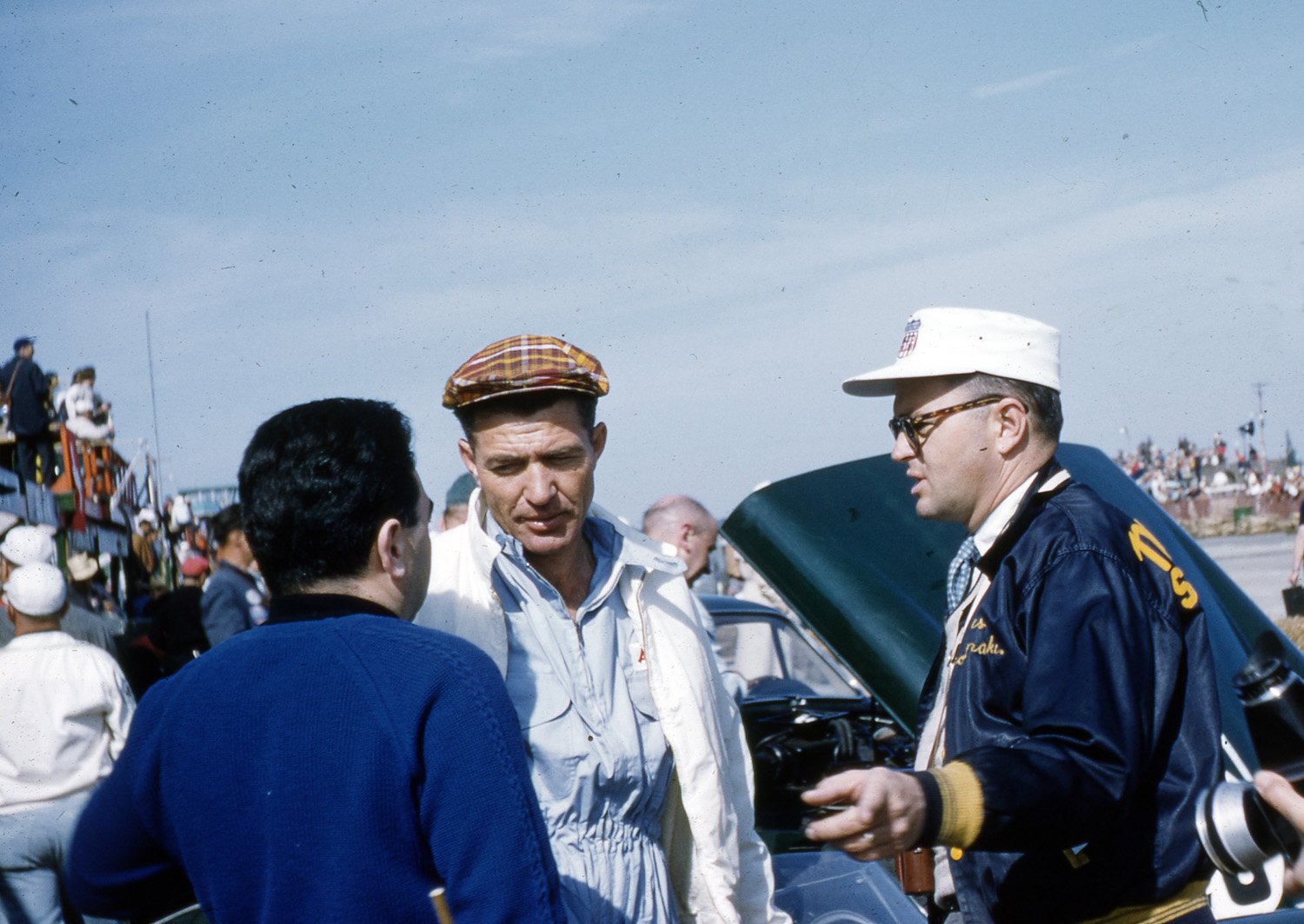
1958: Chris Economaki (white hat) was already a giant in the racing car publishing business with National Speed Sport News. He points to the left while interviewing Carroll Shelby on the grid. Shelby drove a factory Aston Martin but the car was a DNF.
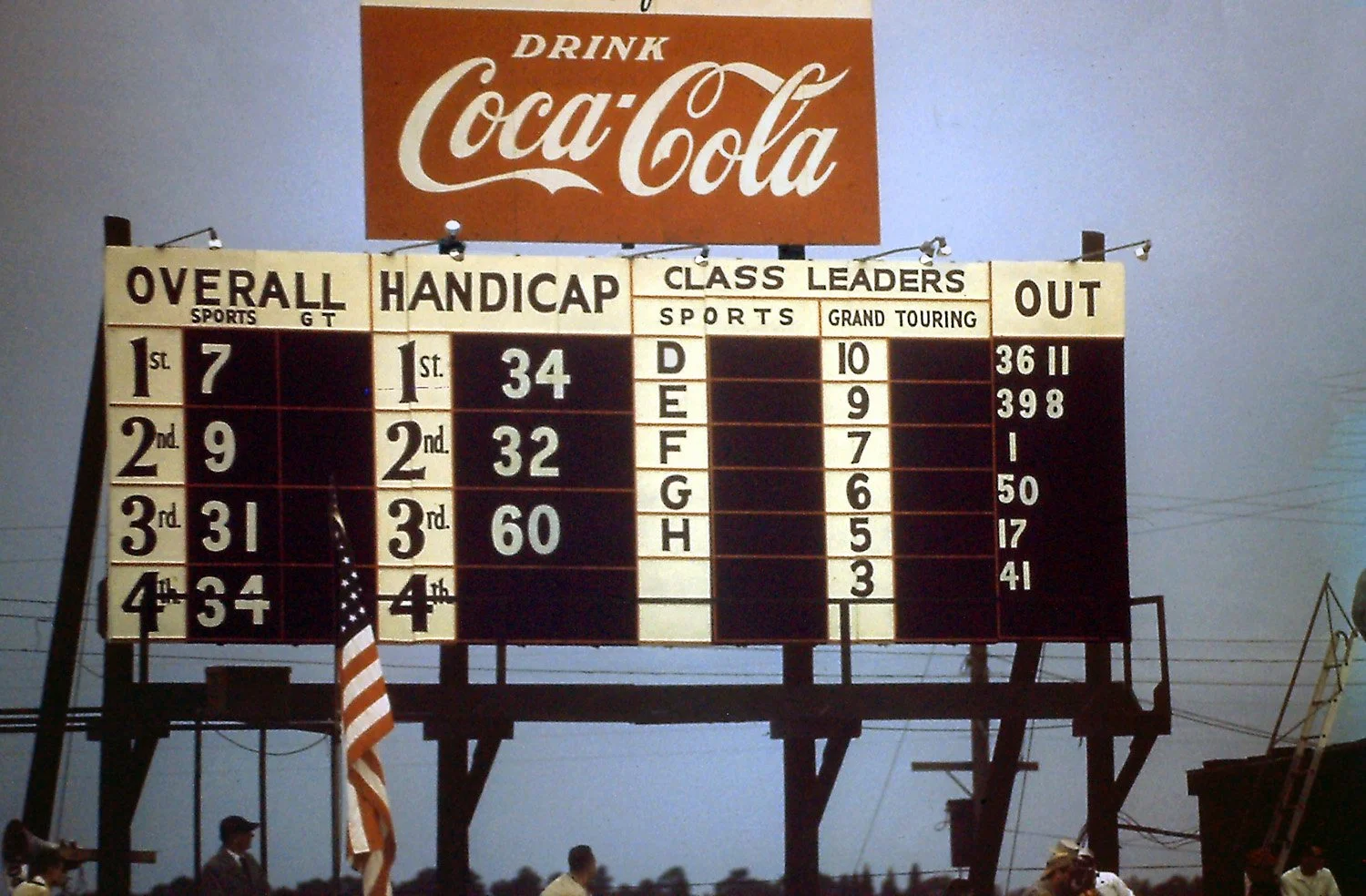
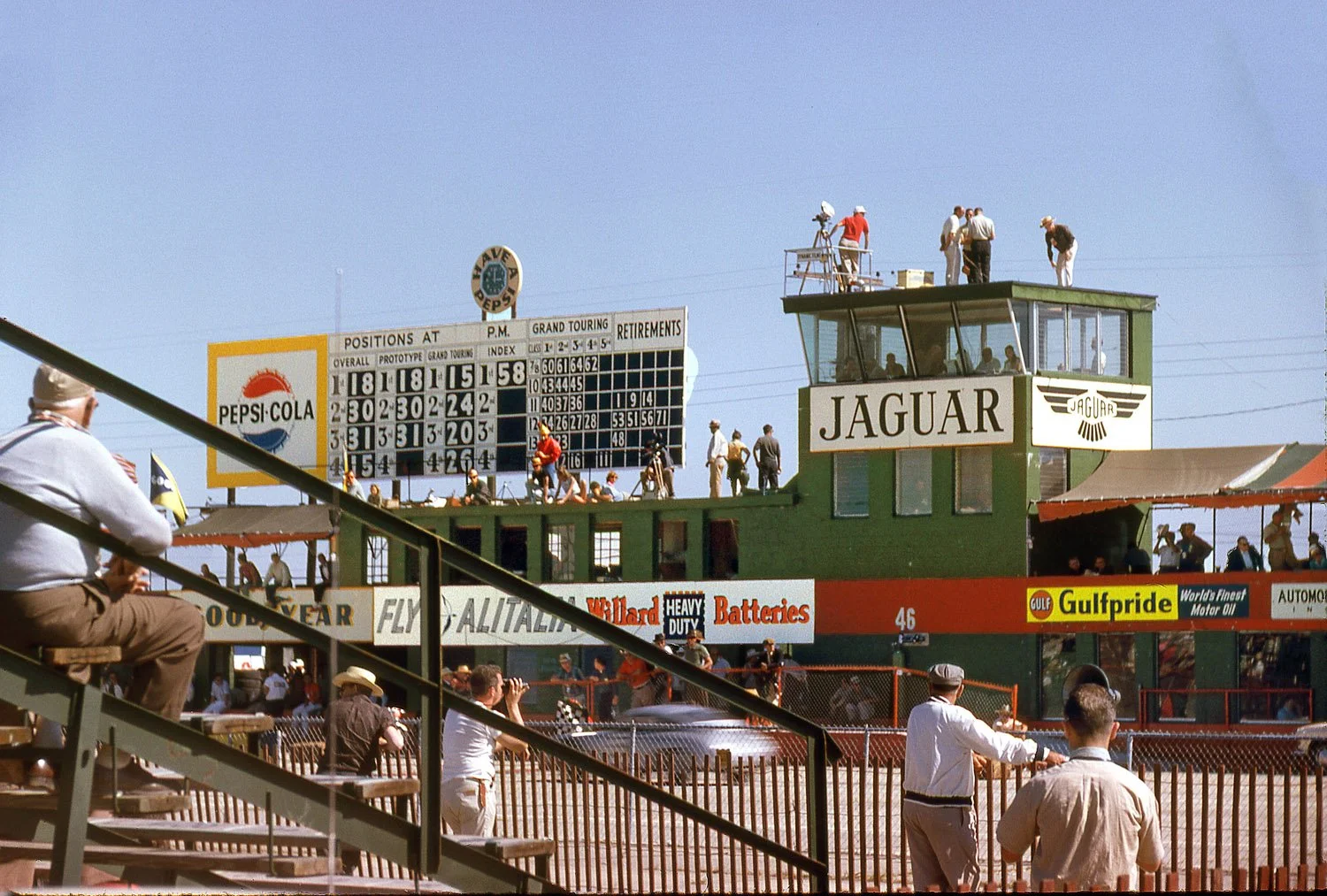
1959: The scoreboard is much improved from the one we showed in 1954 but still a long way from today. The #7 Ferrari is leading from Ferrari #9 and they would finish this way with Phil Hill, Ollie Gendebien, Chuck Daigh and Dan gurney sharing the driving. At the end the #34 Porsche passed the #31 Porsche to finish 3rd.
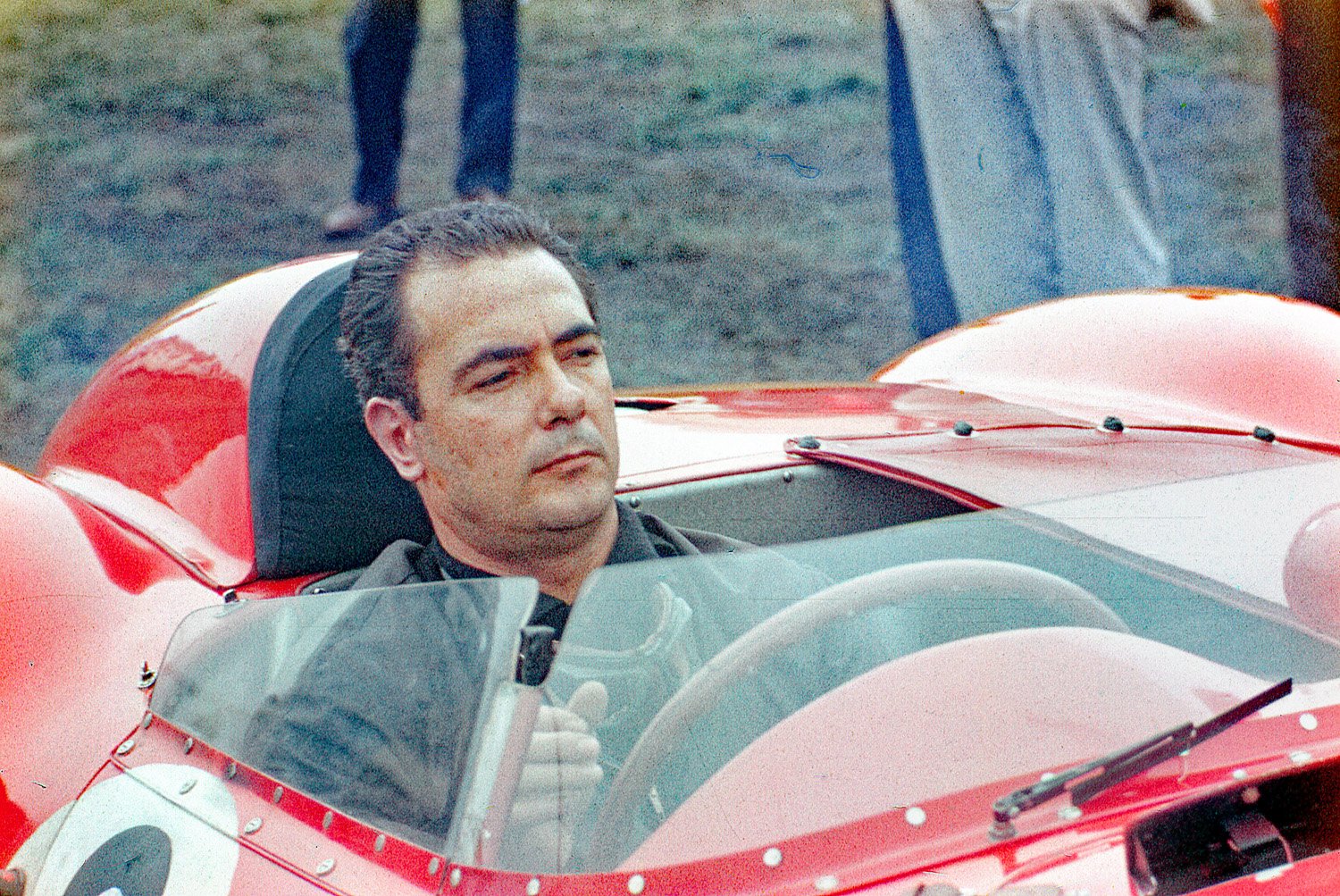
1959: French ace Jean Behra sits in his Ferrari 59/60 Testa Rosa. Behra was a super fast driver but had a temper. Later in July 1959 Behra would punch out Ferrari team manager Tavoni after Tavoni accused him of ruining his Ferrari at the French grand prix. Just a month later Behra crashed and was killed at the Avus ring in Berlin.
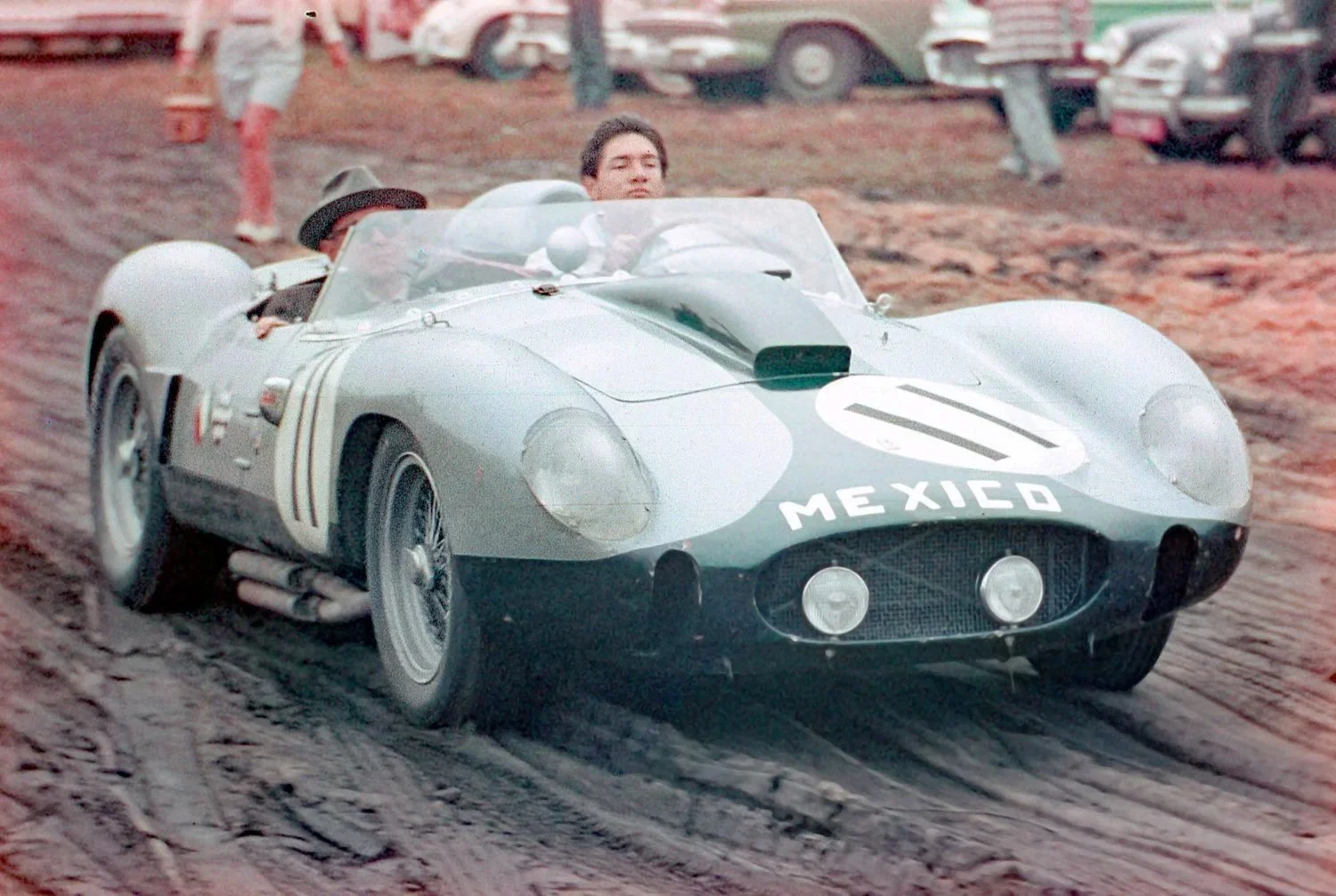
1959: It was a cold and rainy weekend. Pedro Rodriguez drives through the mud with is father in the Ferrari 250TR #11. Pedro co drove with Paul O’Shea but as was usual for the Rodriguez boys, the car failed to finish.
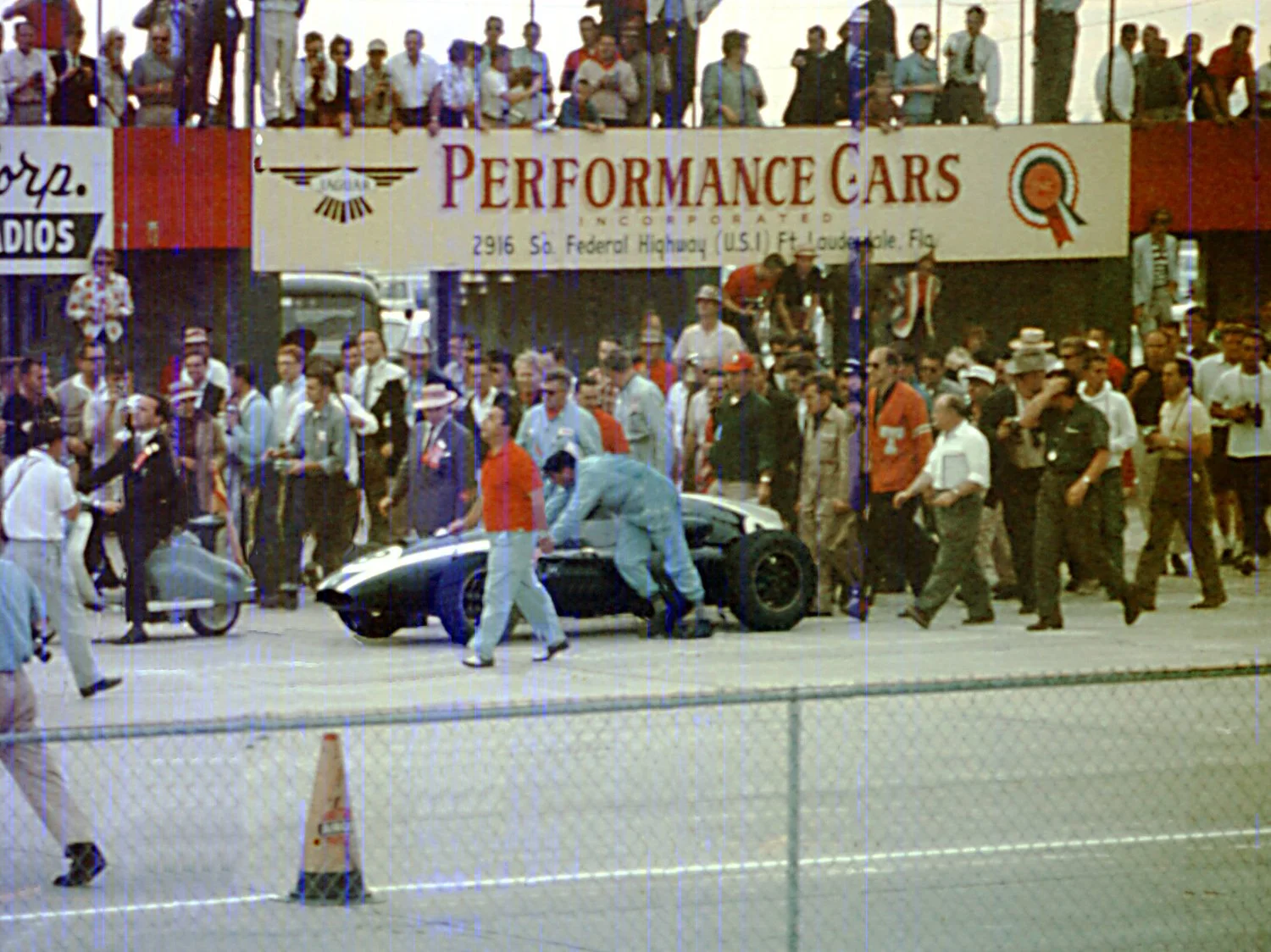
1959: The first FIA World Championship grand prix was held in December at Sebring. Jack Brabham became world champion after pushing his Cooper to the finish line for 4th place. It was the first championship for a rear engined car, for Brabham and for an Australian driver.
1960: A pensive Masten Gregory waiting for the start. Gregory partnered with Carroll Shelby in a Camoradi Birdcage Maserati. The car lasted 3 laps and blew up.
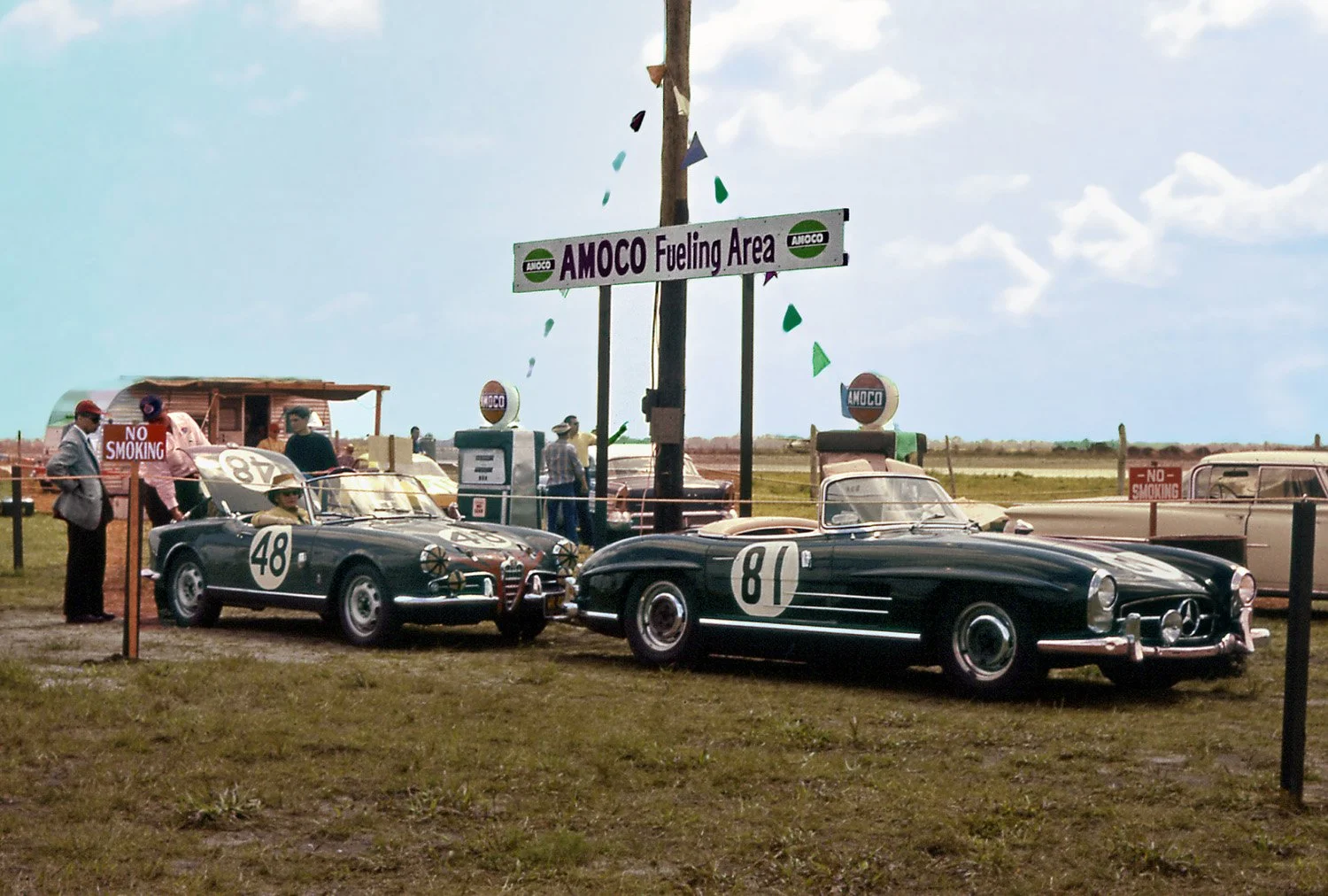
1960: Cameron Argetsinger (red cap) watches as his Alfa is fueled before practice. This fueling station was busy all weekend with teams taking 5 gallon cans back and forth during the race.
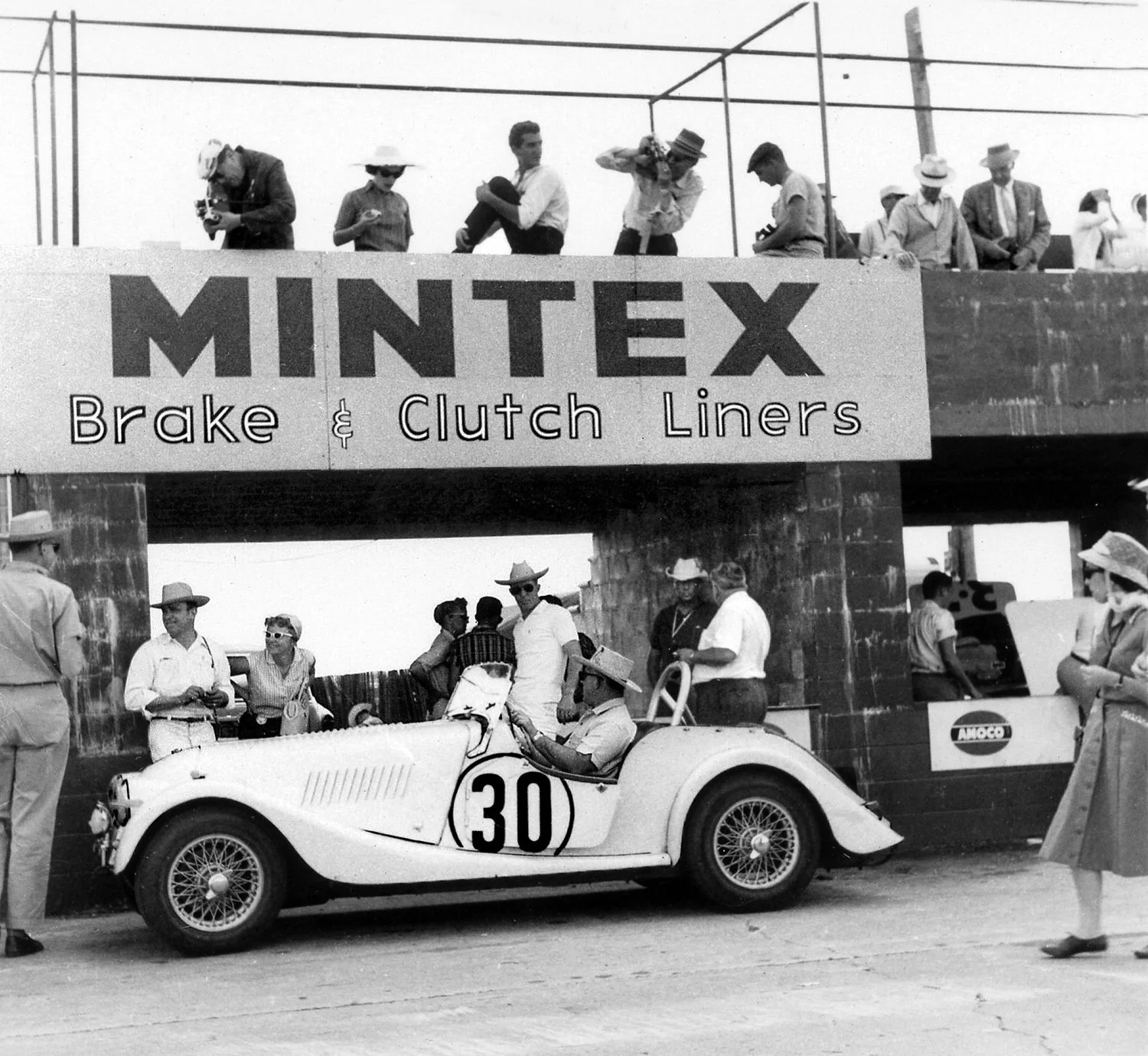
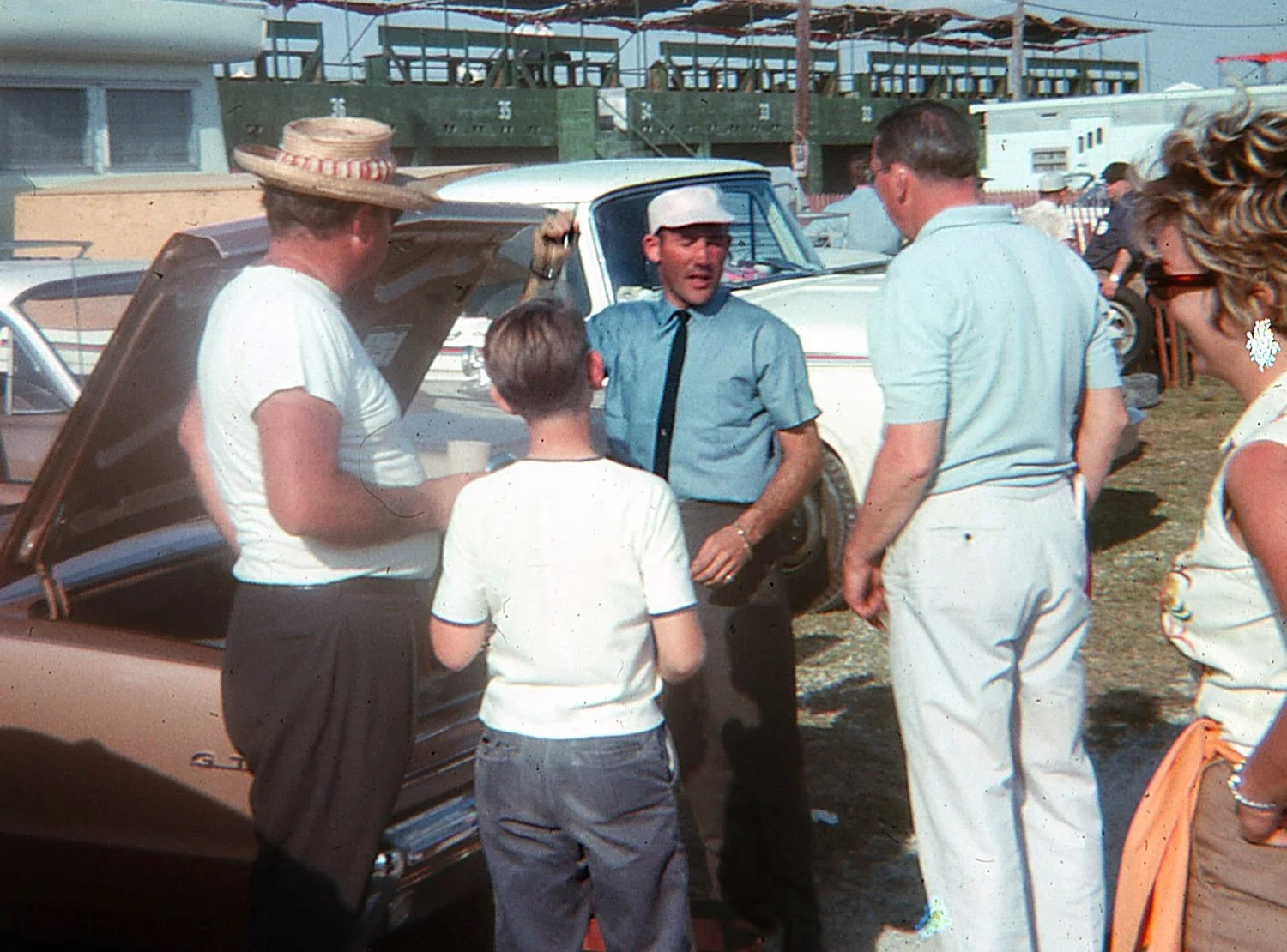
1960: It was still common to see a local dealership from somewhere in America race Sebring. Jim Forno’s Continental Motors in Vestal, NY brought his whole crew to the race. While they were a DNF the crew had a blast.
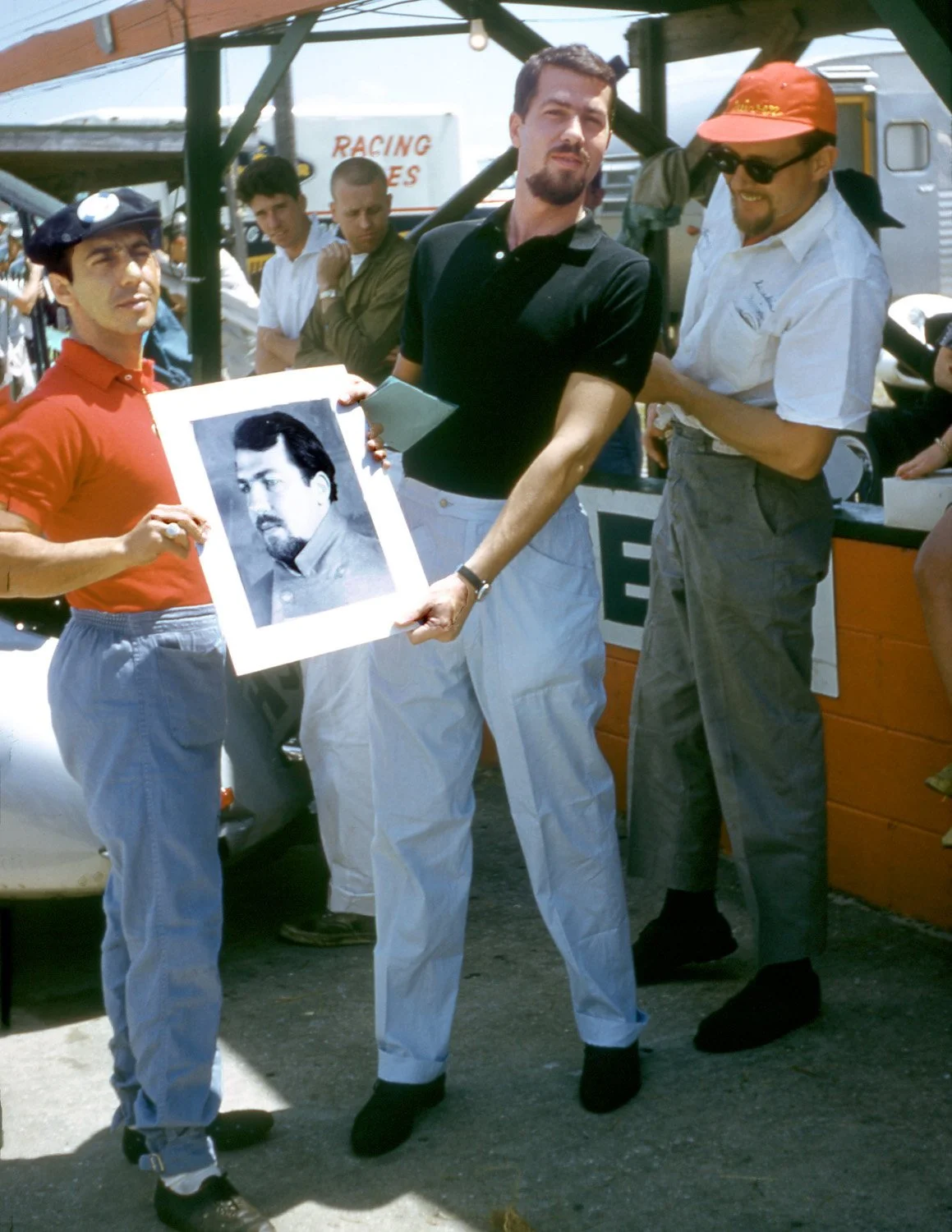
1960: Jo Bonnier and Johnny Cuevas hold a drawing of Bonnier. No idea who did the artwork or why Johnny was holding it. Cuevas was famous for his lighter collection and later his ink pen collections. Did he draw this portrait?
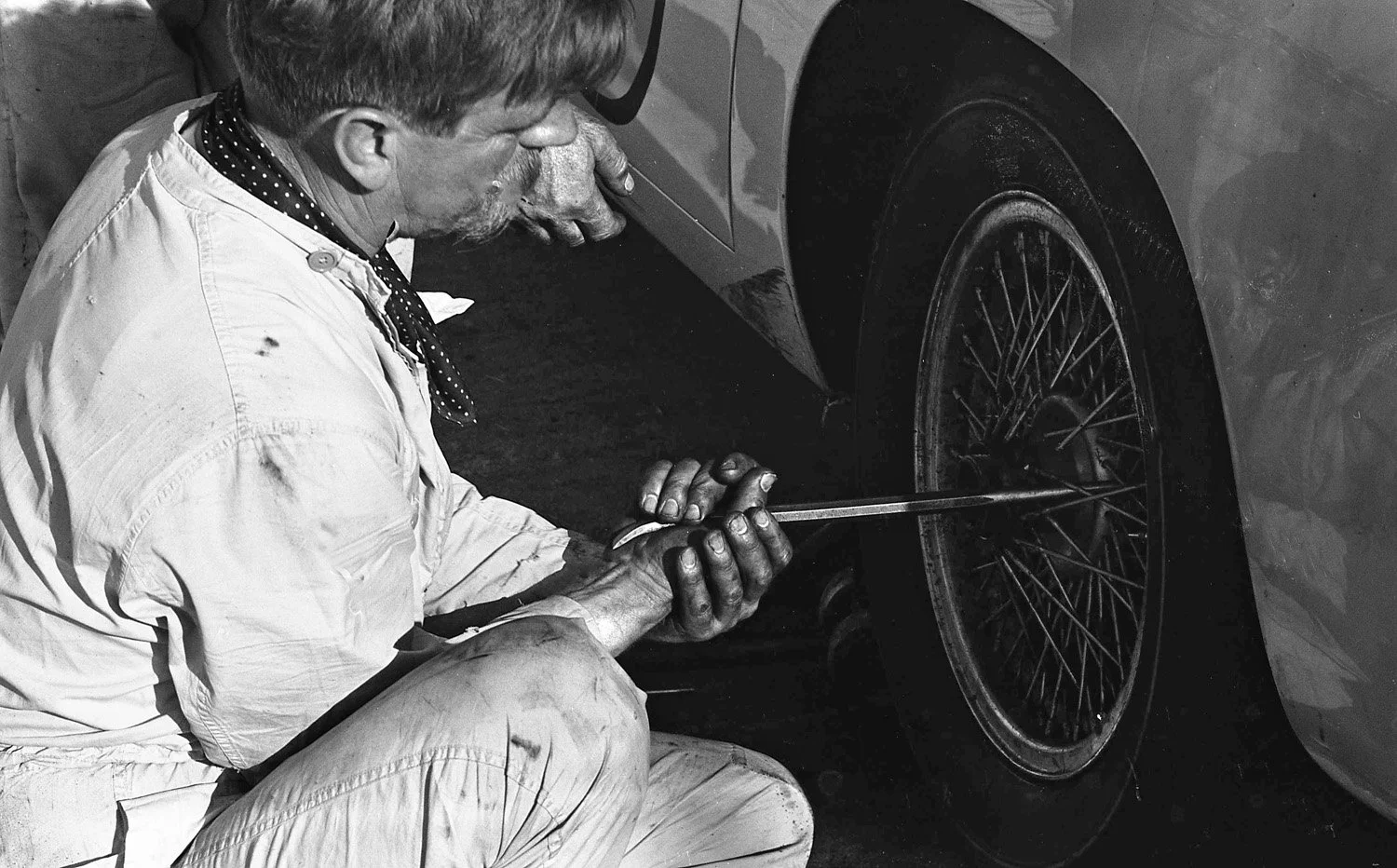
1961: Master Aston Martin mechanic Rex Woodgate is trying valiantly to loosen the wheel on one of the DB4 GTs. The cars were sent with Borrani wire wheels to take wider tires but were so tight both cars went out with broken hubs due to overheating.
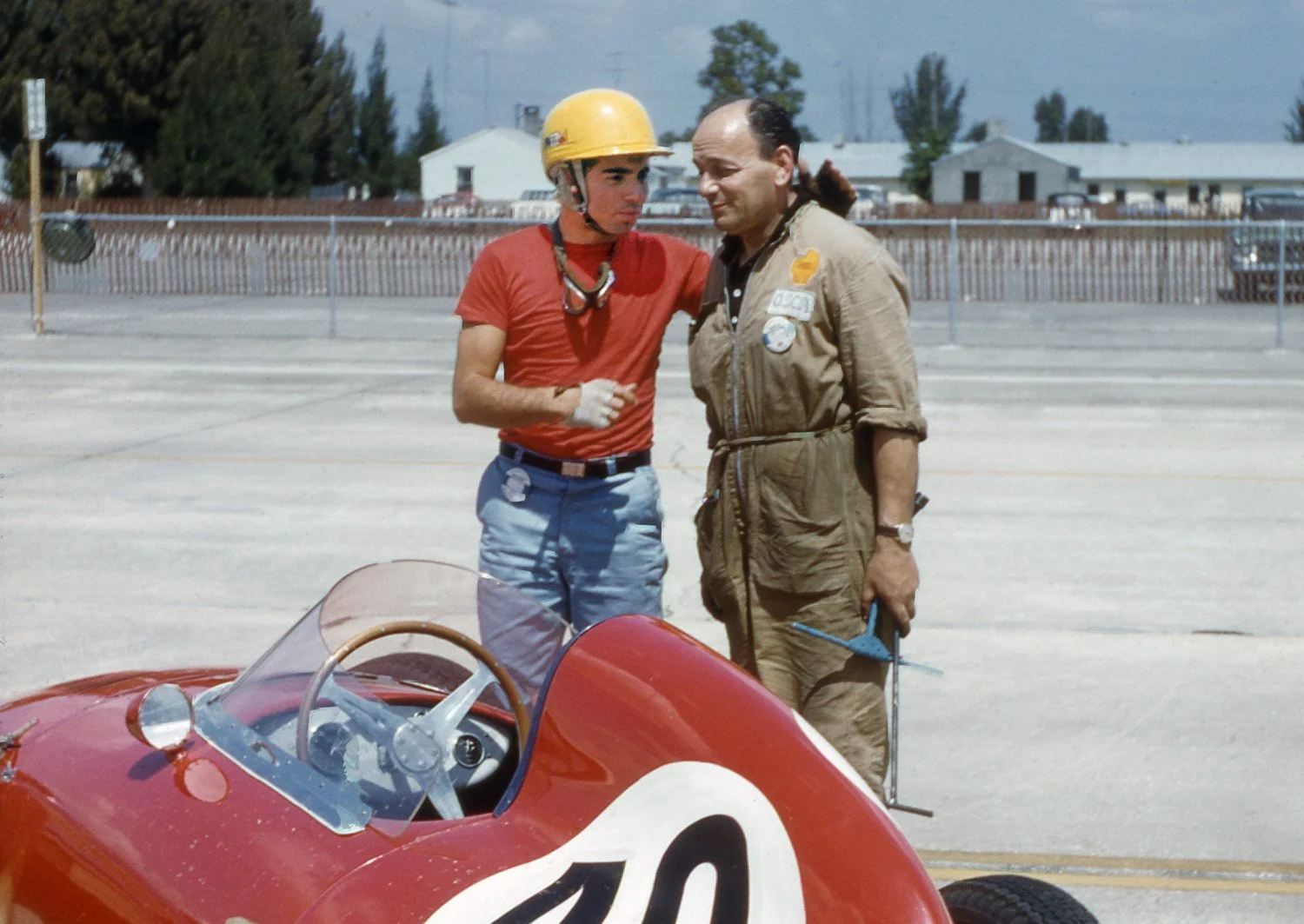
1961. Ricardo Rodriguez chats with his mechanic prior to the formula junior race. Ricardo drove this OSCA to 12th place Charlie Kolb won in a Gemini. Pedro drove a Cooper to 5th place.
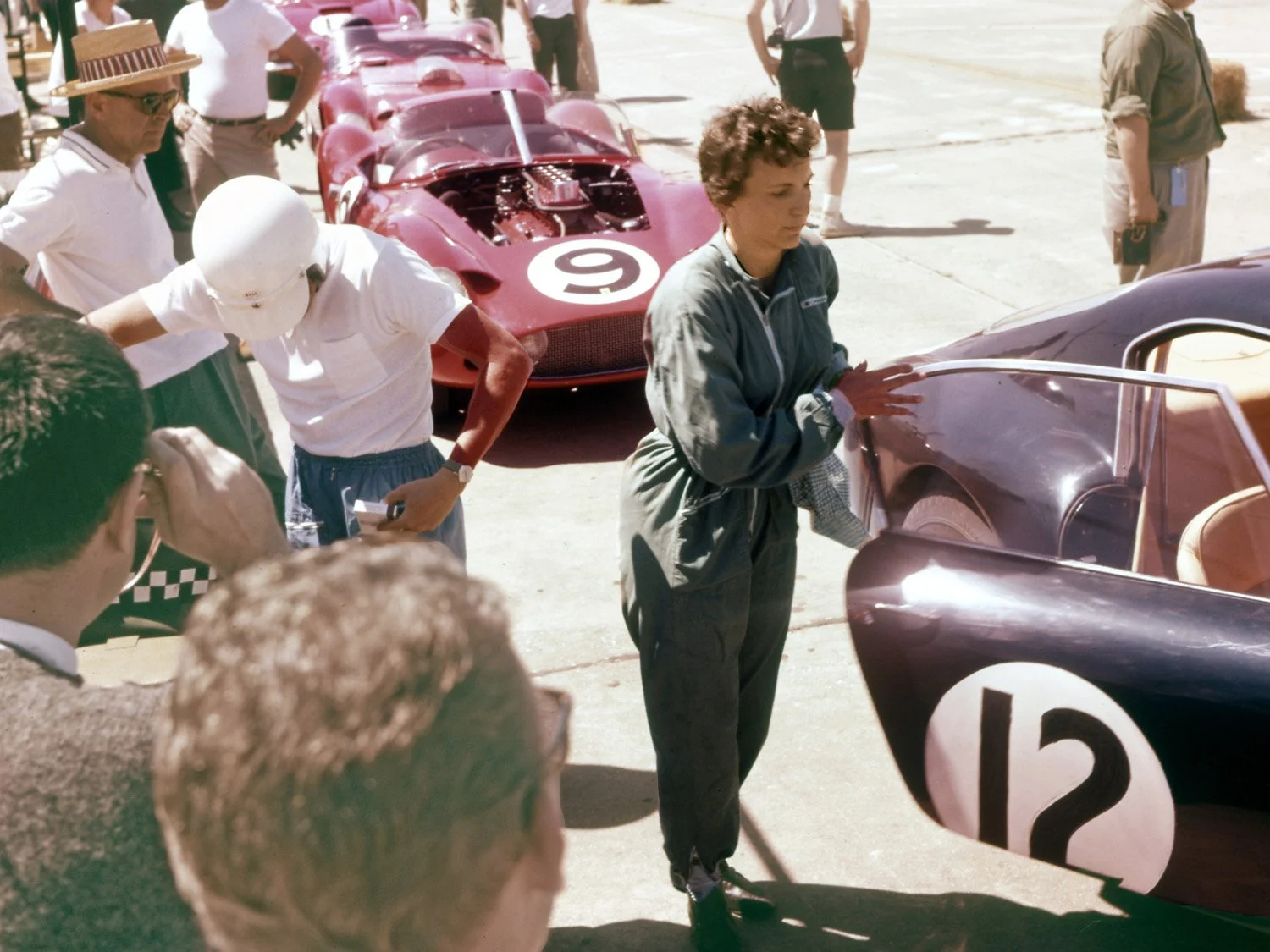
1961: Denise McCluggage is preparing her Ferrari Berlinetta. Co-Driver Alan Eager, head down, is visualizing. In a stunning race, the duo won the GT class over stout competition and drove the Ferrari back to New York on Monday.
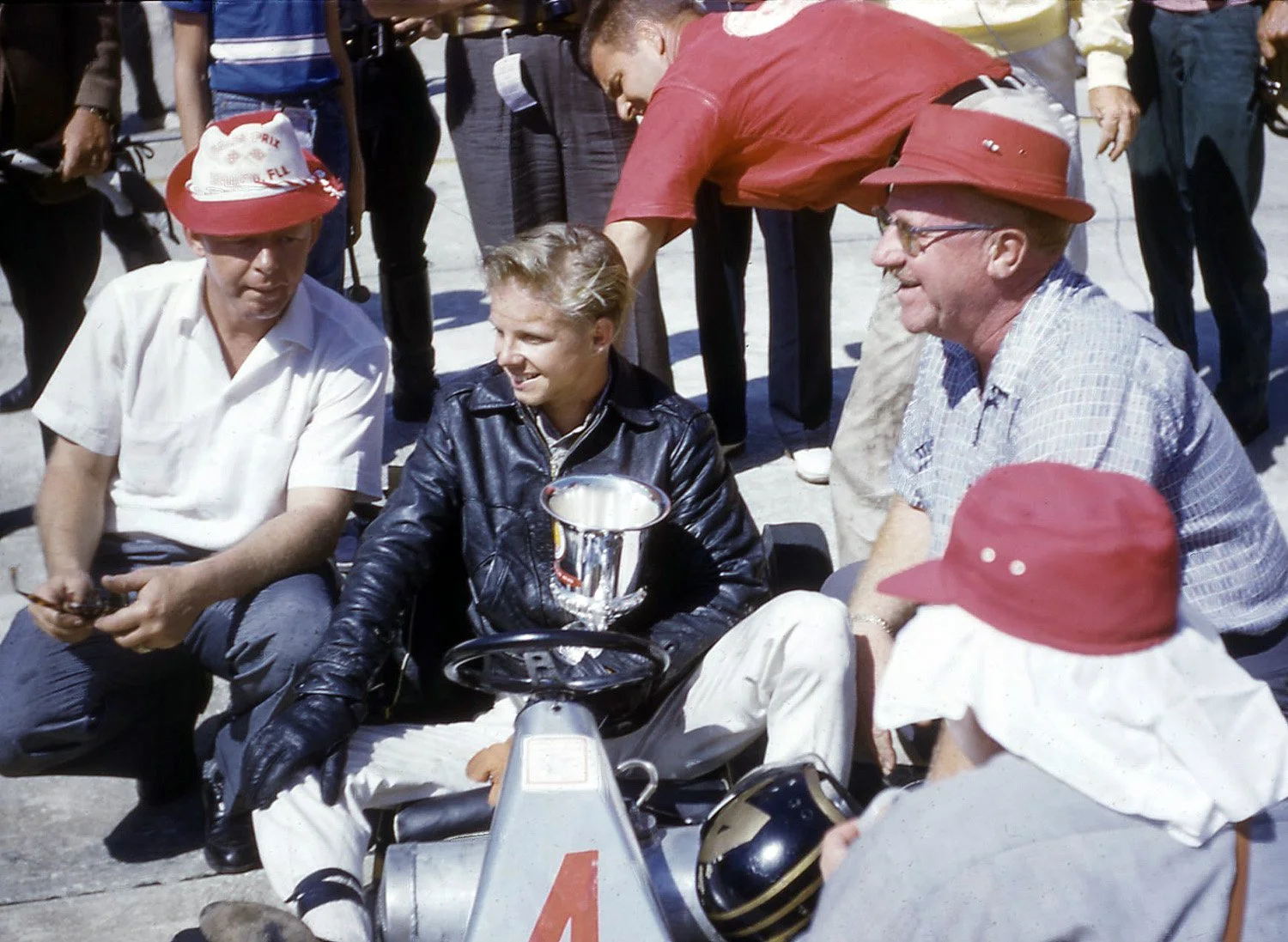
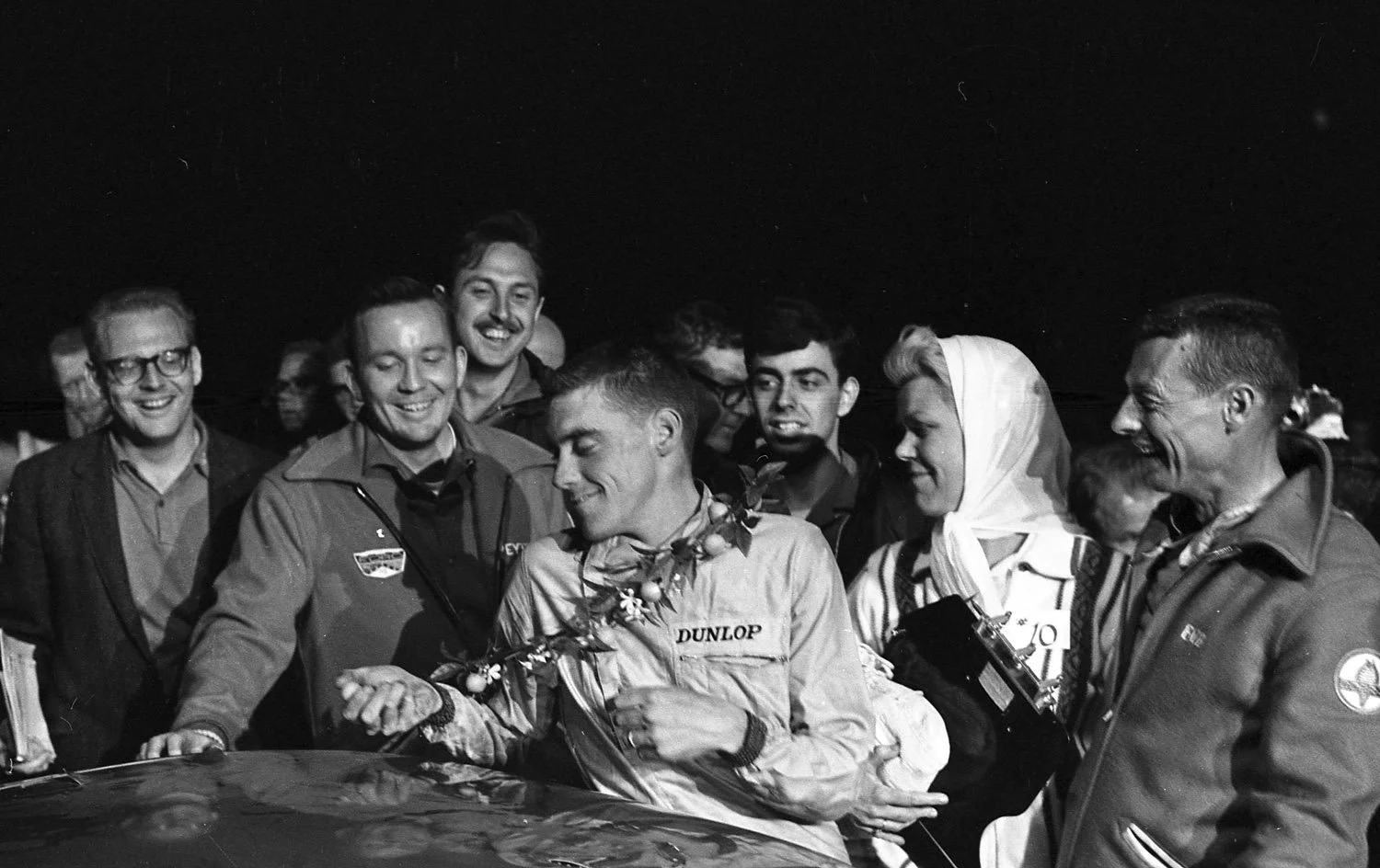
1961: Go Kart champion Bobby Allen wins at Sebring. With him is Red Crise the man behind the Nassau Speed weeks. Bobby went on to be a Sprint car legend but never made it to Indy. His teams won hundreds of races and Bobby lived a long life.
1962: Jo Bonnier discusses something in the cockpit of his Serenissima Ferrari TRI/61 during practice. A great year for the Swede as he won overall. From a Swedish publishing family, Bonnier was easily the most sophisticated GP driver.
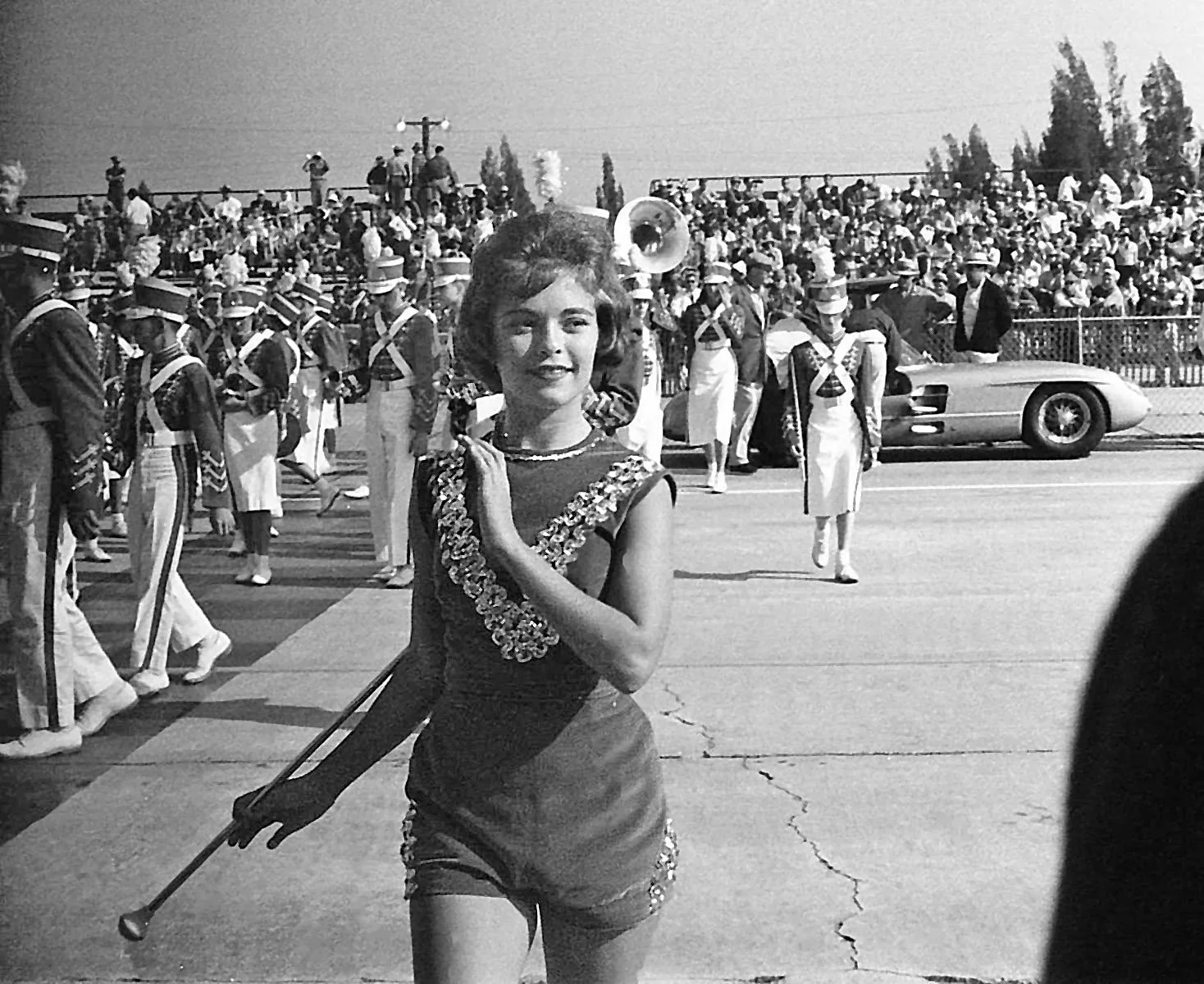
1962: Every year the Sebring high school marching band would perform just before the start. As young men from the frozen north we simply had to take photos of cute baton twirlers.
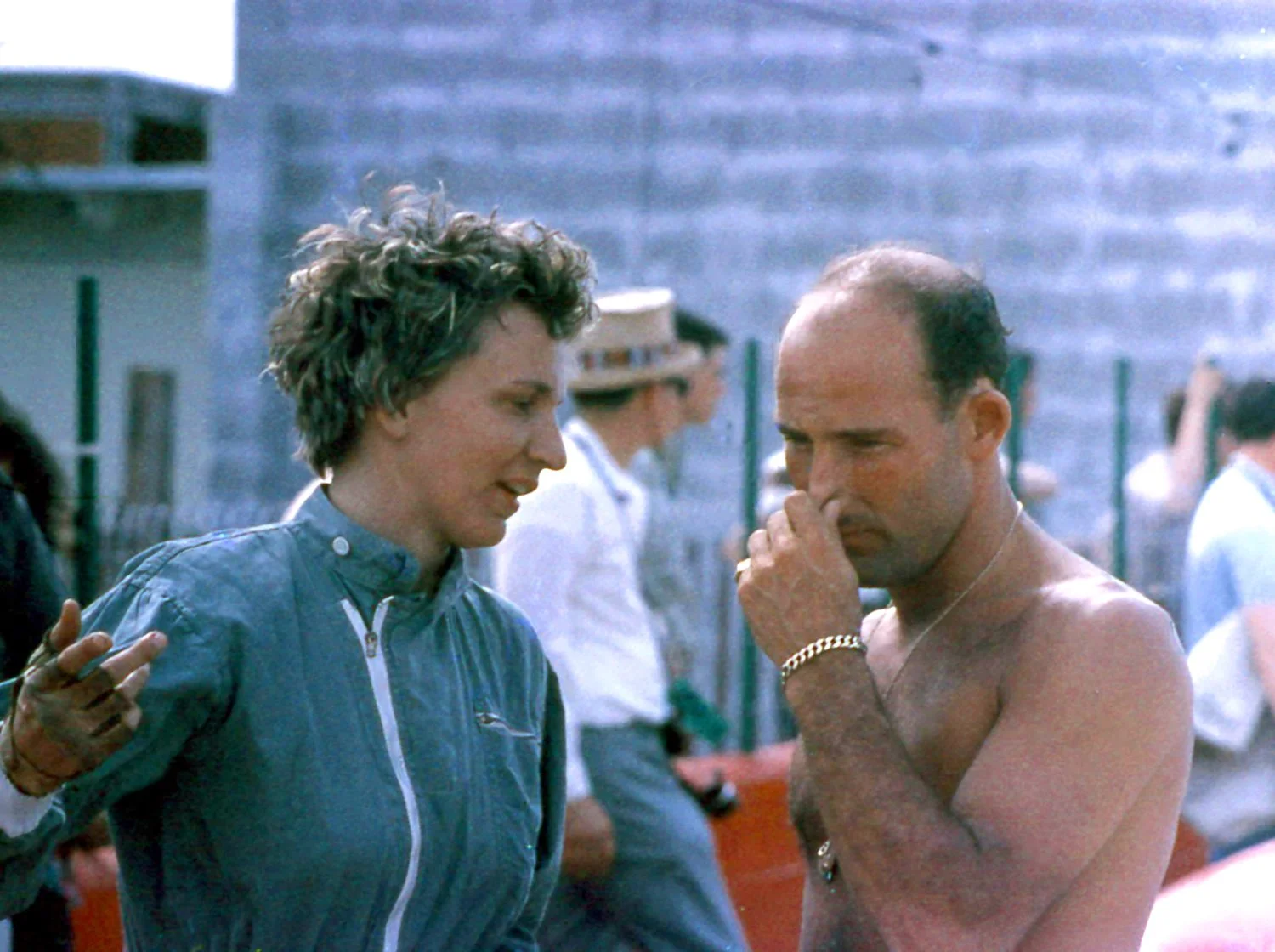
1962: One of the more famous barcboys photos. Denise McCluggage tells Stirling how slow the OSCA is compared to her 1961 GT winning Berlinetta. Moss, always tanned and fit, listens intently. Nobody knew Moss had just a month left in his racing career. His crash at Goodwood on April 23 was his last.
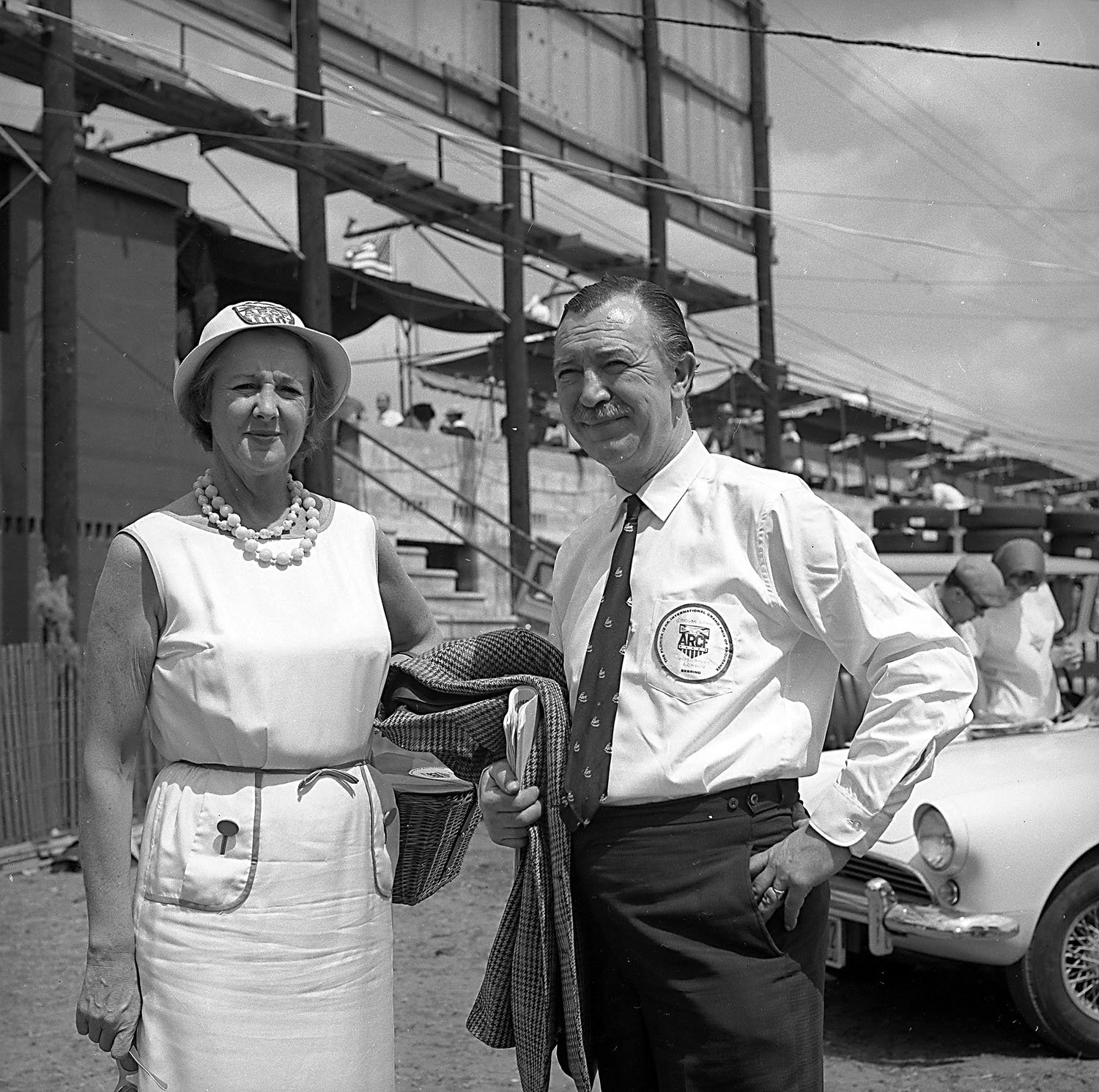
1962: Mrs. Alec Ulman poses with publisher Gregor Grant. Grant was an annual visitor to Sebring as the head of the huge British journal “Autosport”.
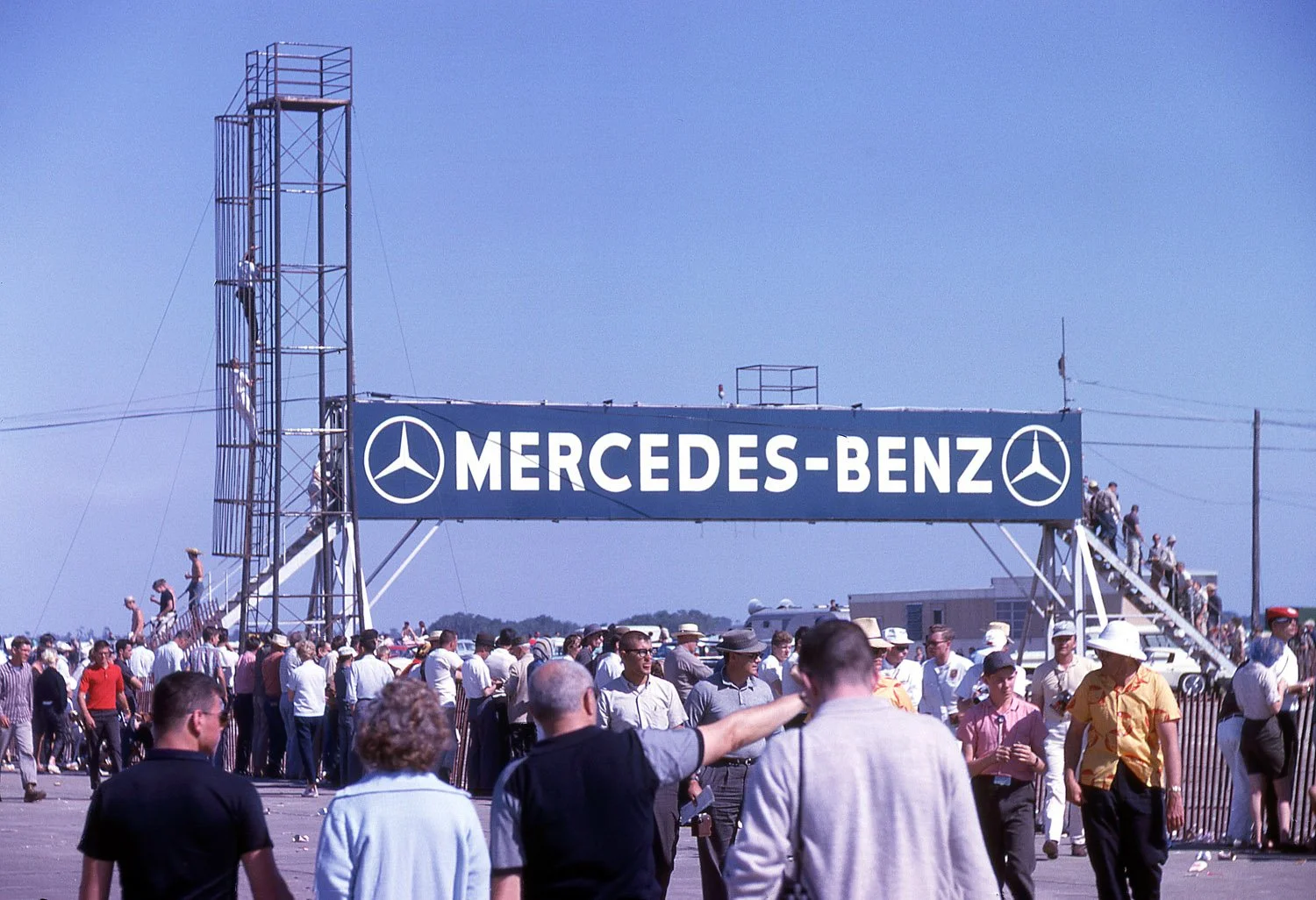
1962: How to get from the paddock to the spectator area? The best was always the Mercedes sponsored bridge. Most anyone with a camera stalled on the steps up and down to snap a few photos. A couple more adventurous souls are climbing the TV tower.
1963: Early on the leaderboard shows the Rodriguez boys leading in #18 with the eventual 1st and 2nd place Ferrari’s behind. At this point Dan Gurney is leading GT in a Cobra with the Ferrari GTO of Roger Penske and Augie Pabst second. The Cobra would fail, the Ferrari would win for the second straight year.
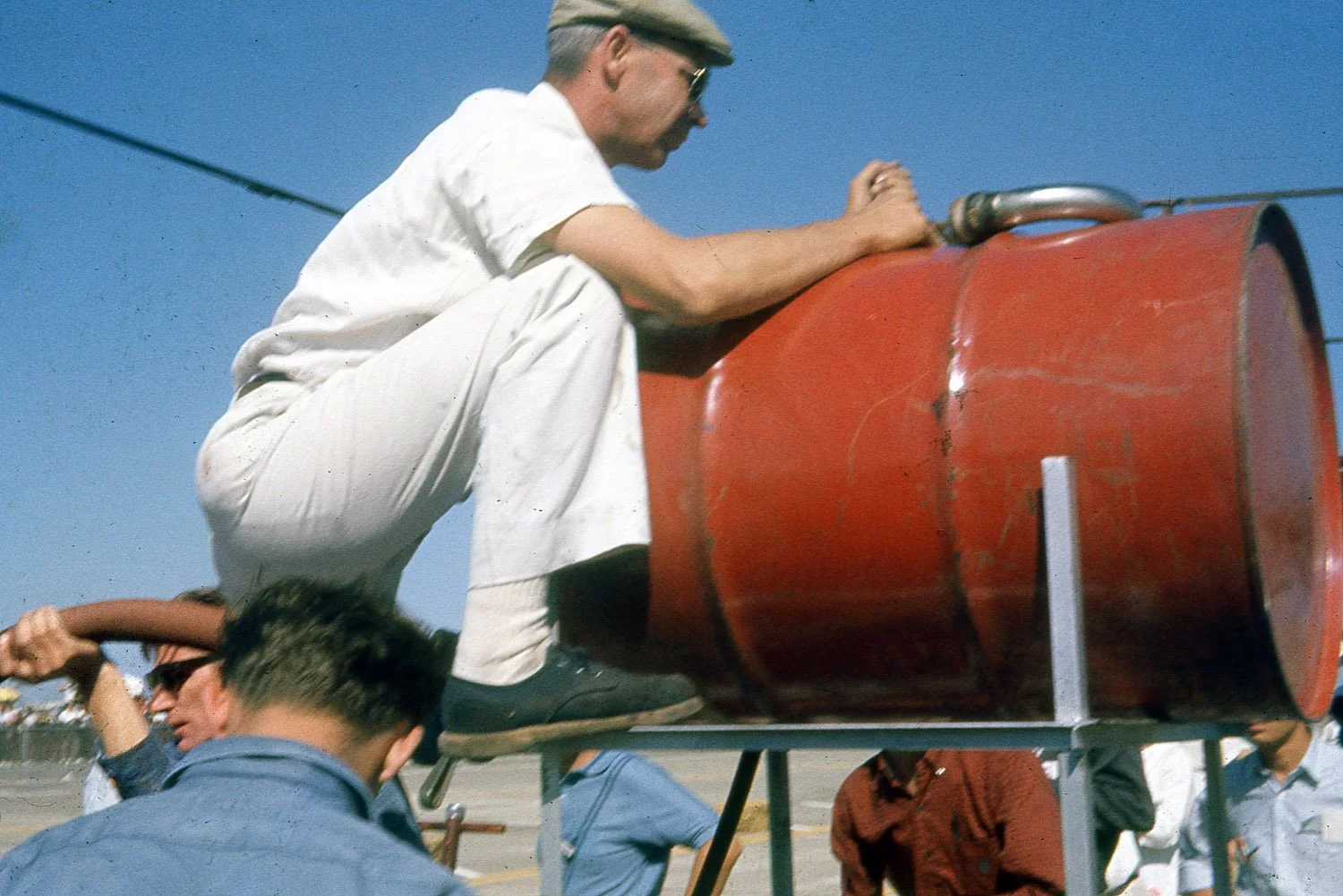
1963: Crews are preparing an overhead refueling system. By now crews had figured out it was much faster to use a huge tank and gravity to refuel. It took several years before they figured out how to stop the gas from gushing out when over filled.
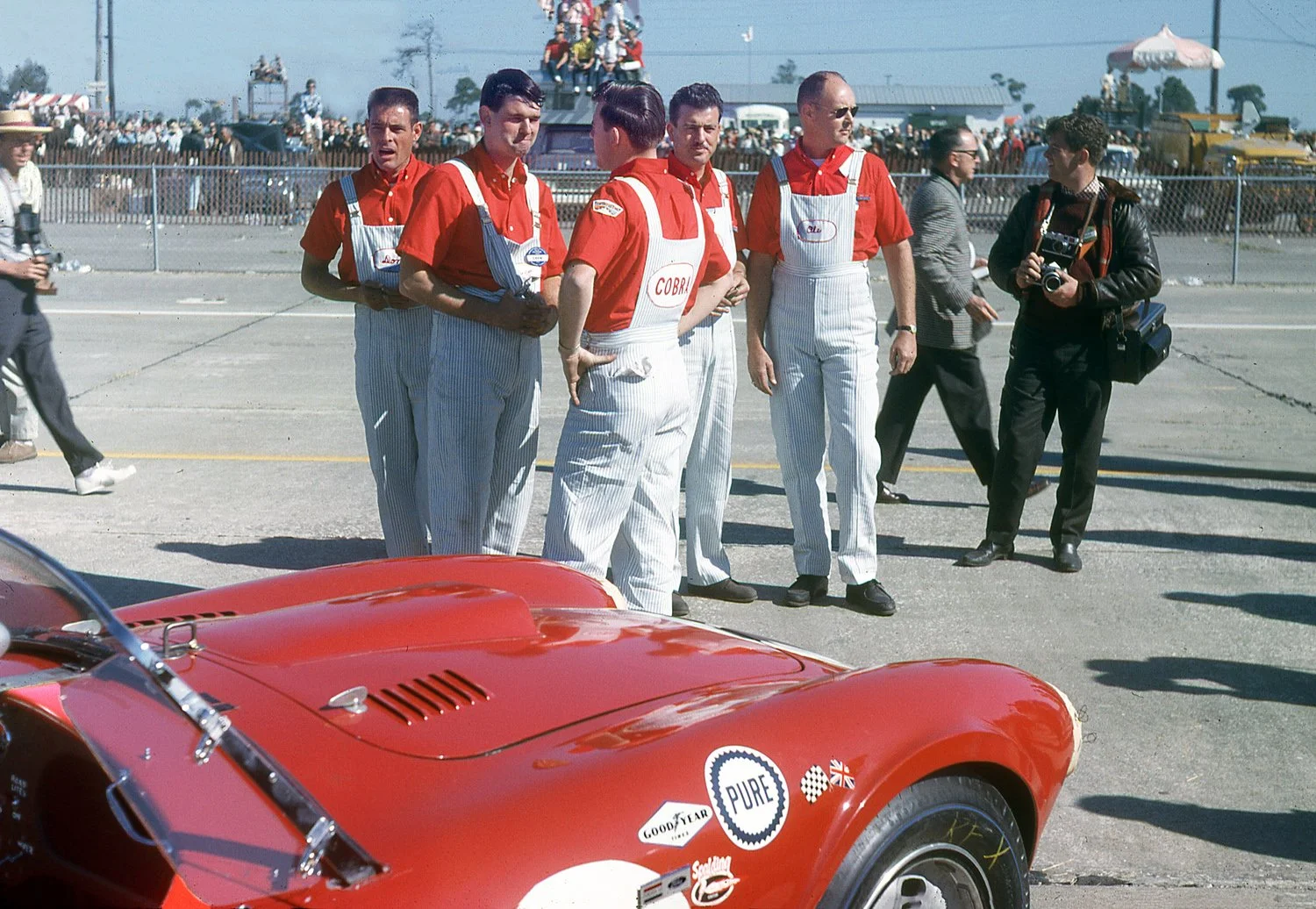
1963: Shelby was out in force with his Cobra’s. The crew decked themselves out in striped bib overalls as a tribute to Shel who wore overalls in his early racing days. Yep, Ol’ Shel wore a pair himself.
1963: There was always a crowd around the prototypes and this gathering is looking at the business end of the Mairesse, Vacarella and Bandini 250P Ferrari.
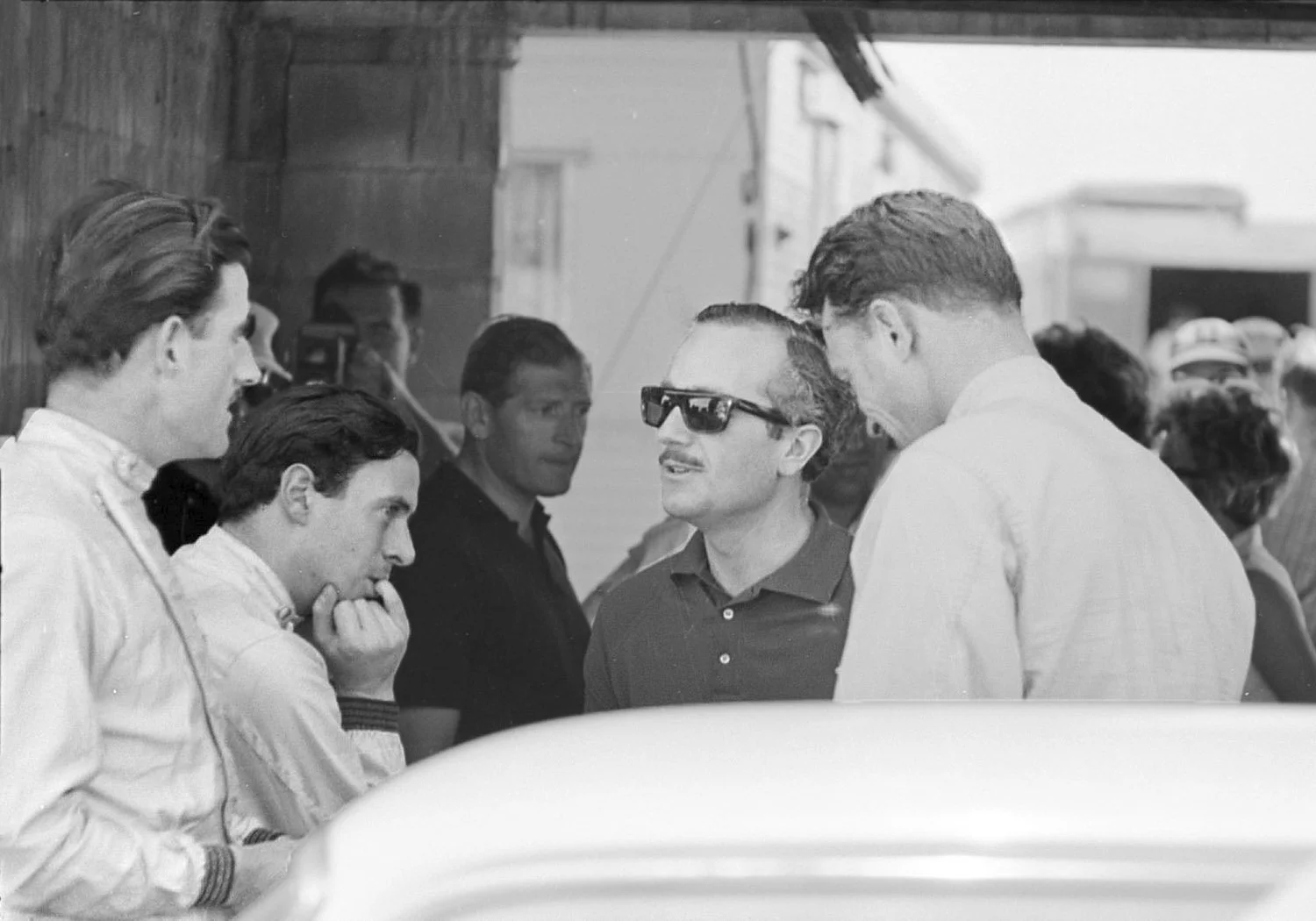
1964: Why are Graham Hill, Jim Clark, Colin Chapman and Dan Gurney in deep conversation? Chapman is telling Hill he best get on the Indy program. Clark and Gurney have already done it and Chapman thinks Hill can win it. And he did 2 years later.
1964: All his life Stirling Moss was recognized and adored. In the paddock loading his rental car, Moss is stopped by spectators and has his pen ready for the always sought autograph of the great man.
1964: The Cobra Daytona Coupe wins Sebring for their first big International win. Dave Mc Donald and Bob Holbert (right) were 4th overall and won GT
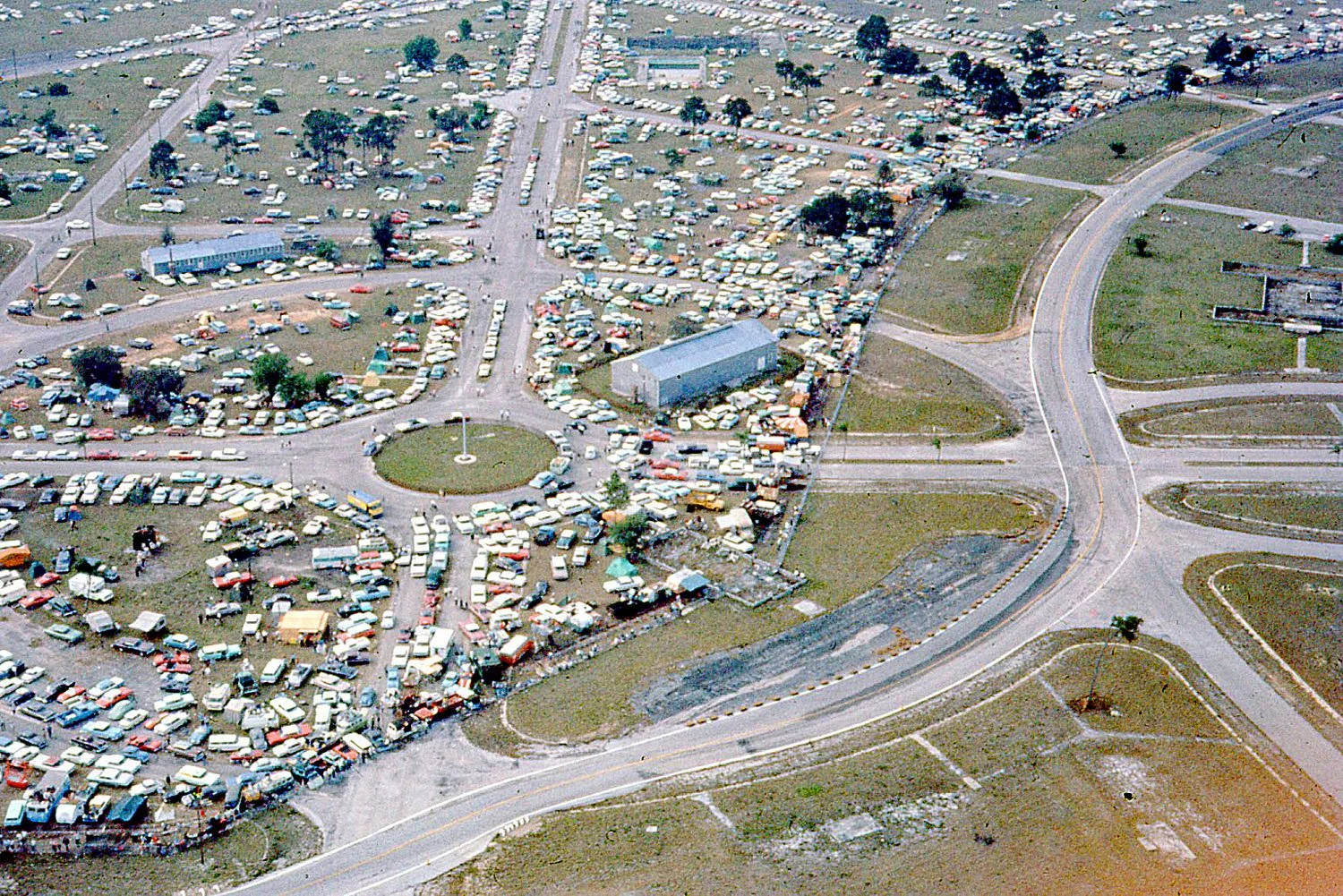
1964: Sebring was growing faster than anyone expected. An aerial view shows part of the 60,000 that attended. The fences at the esses are wall-to-wall packed. You can clearly see the outlines of the old barracks foundations.
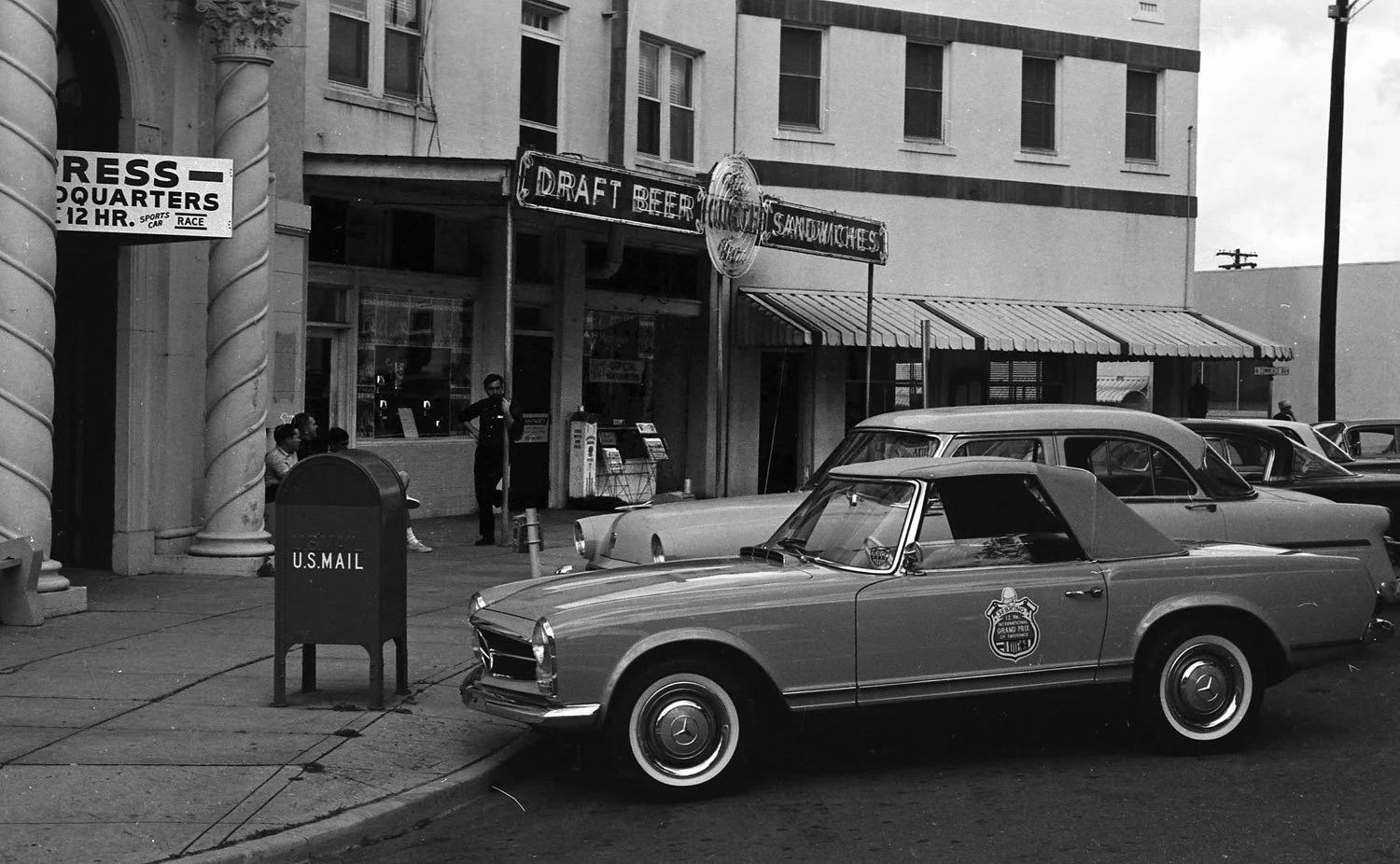
1964: Yes, the 12 hour Press HQ was smack next to the infamous Circle Bar. Back before the squeaky clean driver revolution, everybody made it to the Circle Bar at one time. It is perfectly justifiable to have a Press HQ next to a bar.
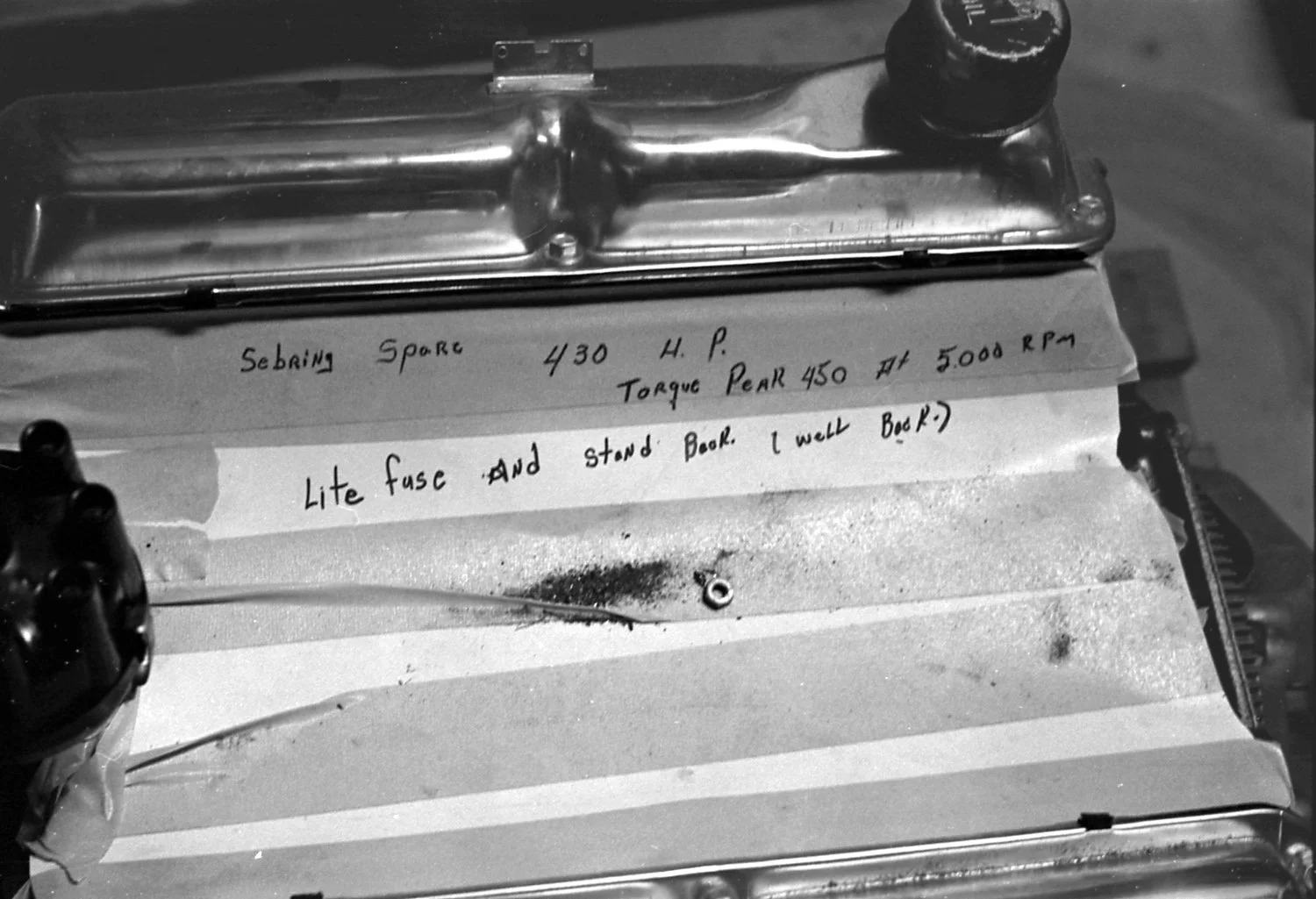
1965: What’s the sense of working so hard if you can’t have a little fun? The Ford crew needed to identify this spare motor and did so with style.
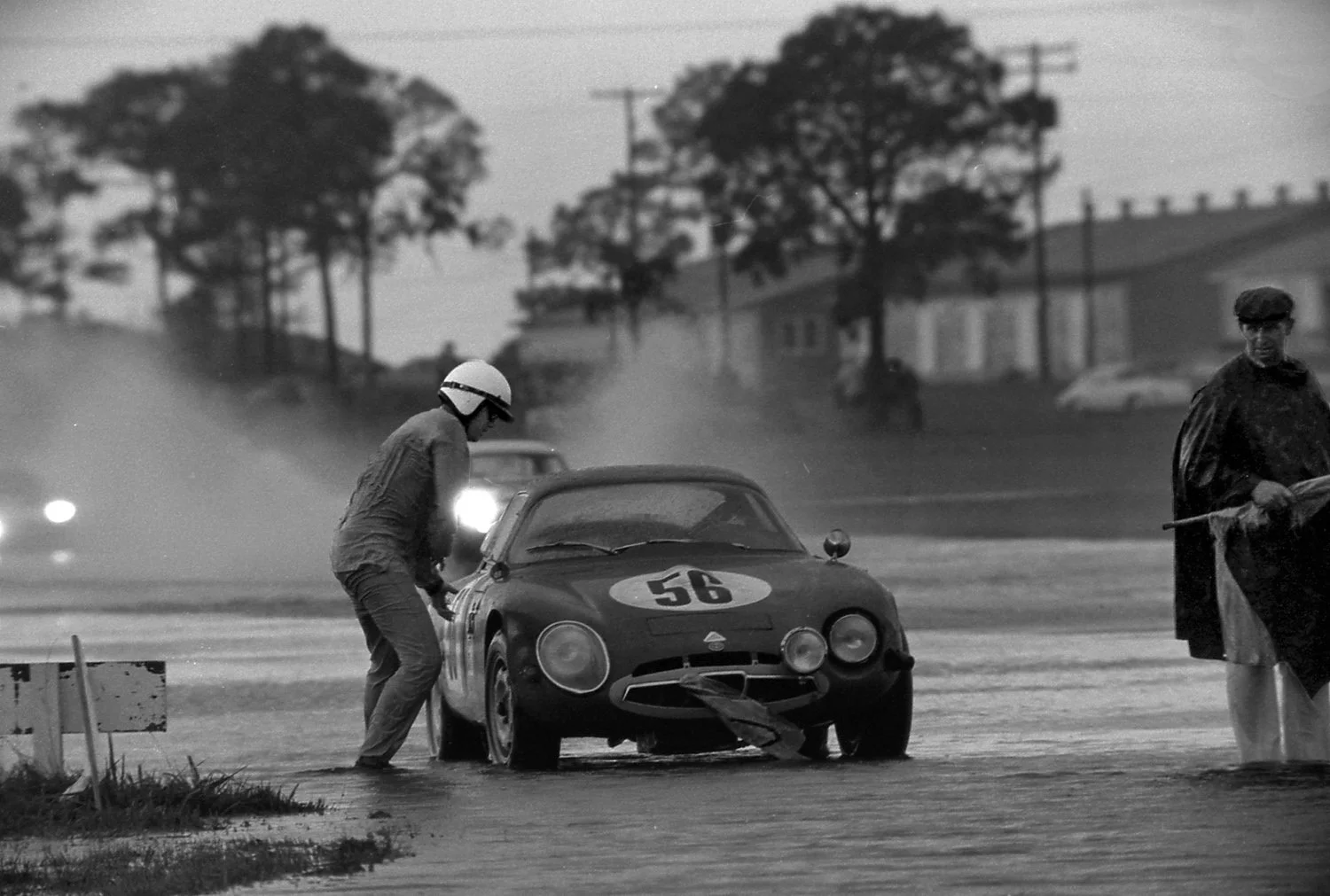
1965: The rains were epic. You can see this Alfa driver is ankle deep while standing on the track ! The current in the pits was so strong it literally floated spare wheels and tires away. Somehow all the MGB’s continued to run despite Lucas electrics.
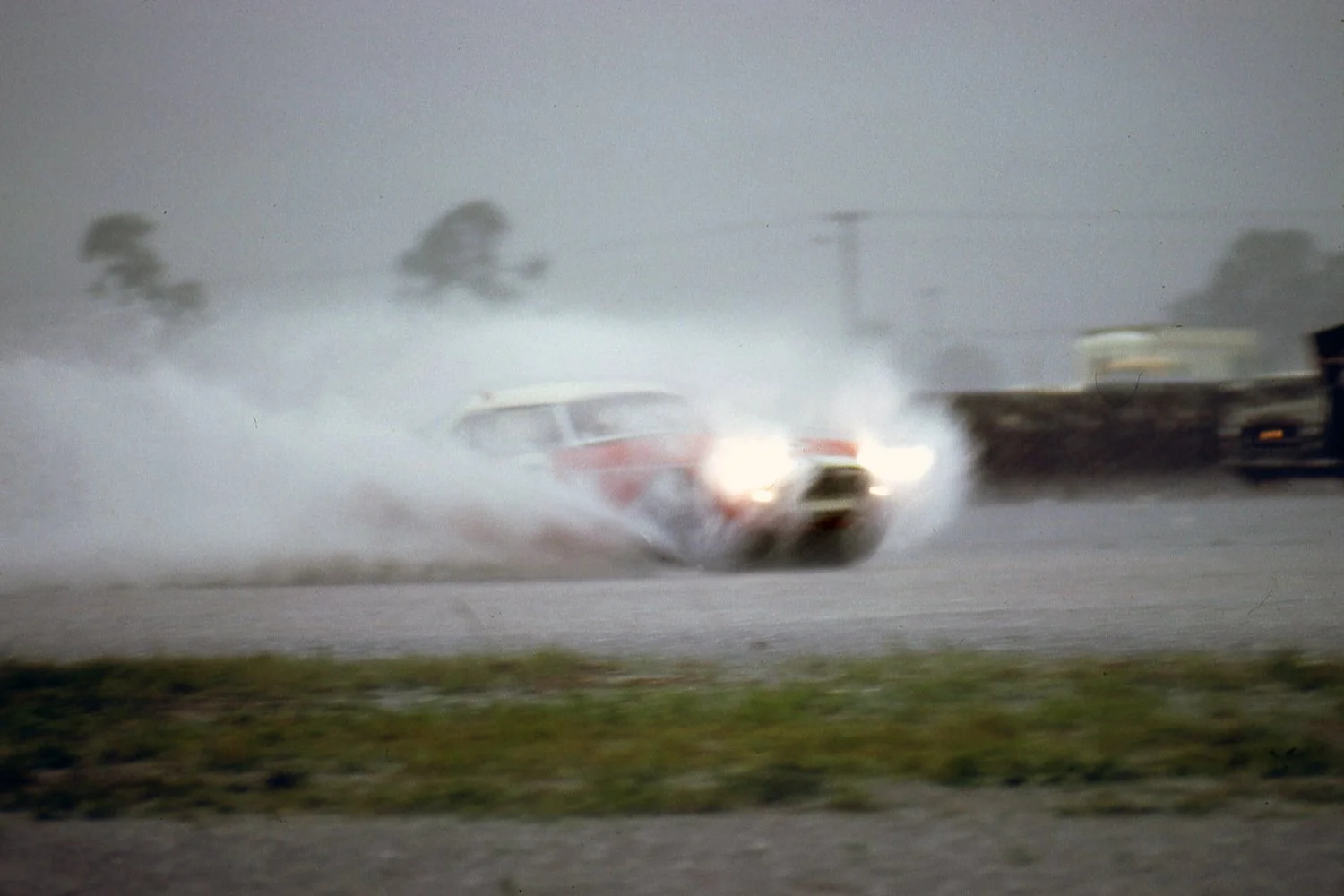
1965: The track was flooded but unlike today, the race carried on. And it created the possibility of some great photos. A factory MGB looks more like a speedboat as it runs with lights blazing.
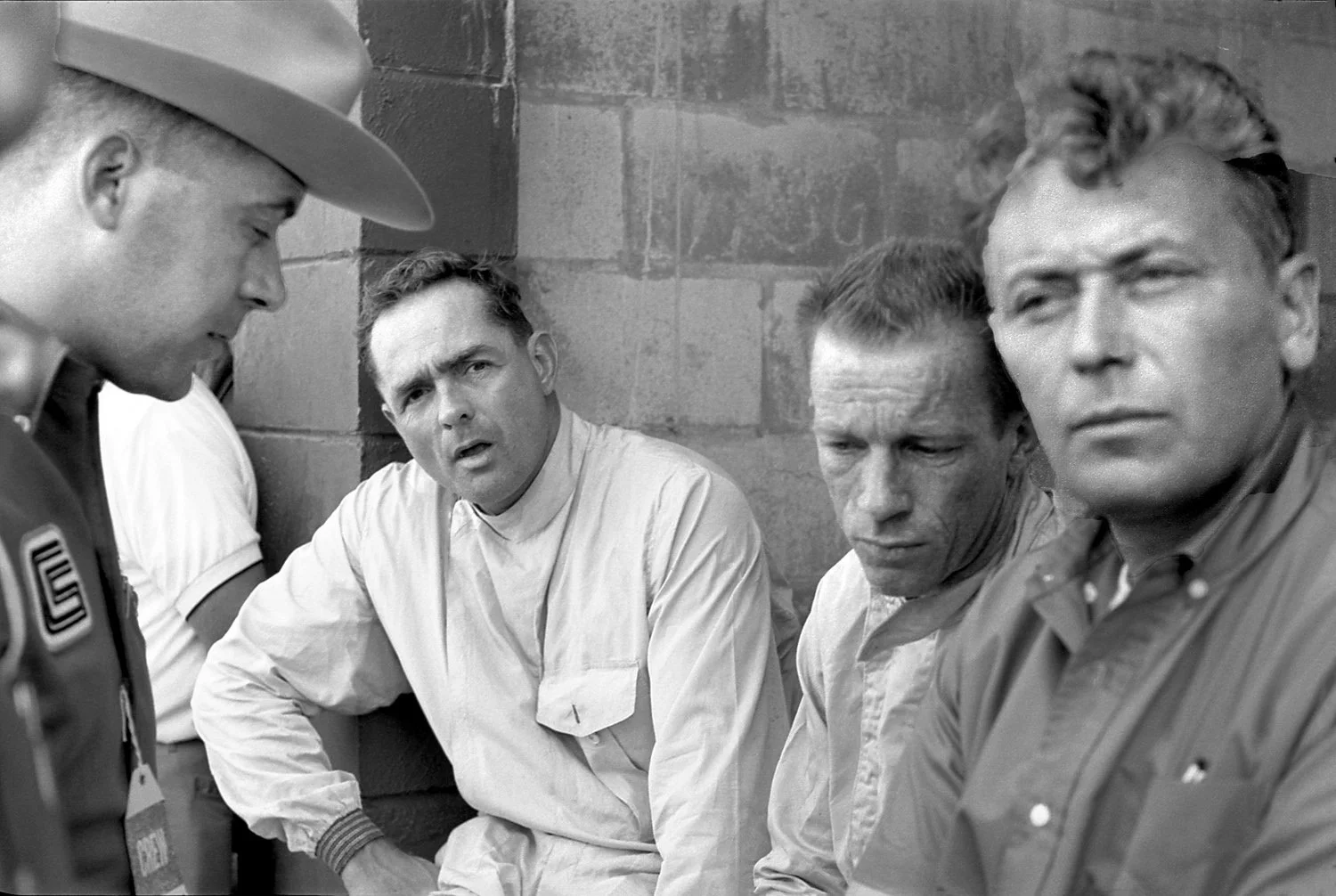
1965: Unbelievable world class talent in this photo. L-R Carroll Smith, Phil Hill, Richie Ginther and Phil Remington. How many wins, how many cars, how many genius ideas were accomplished by this quartet?
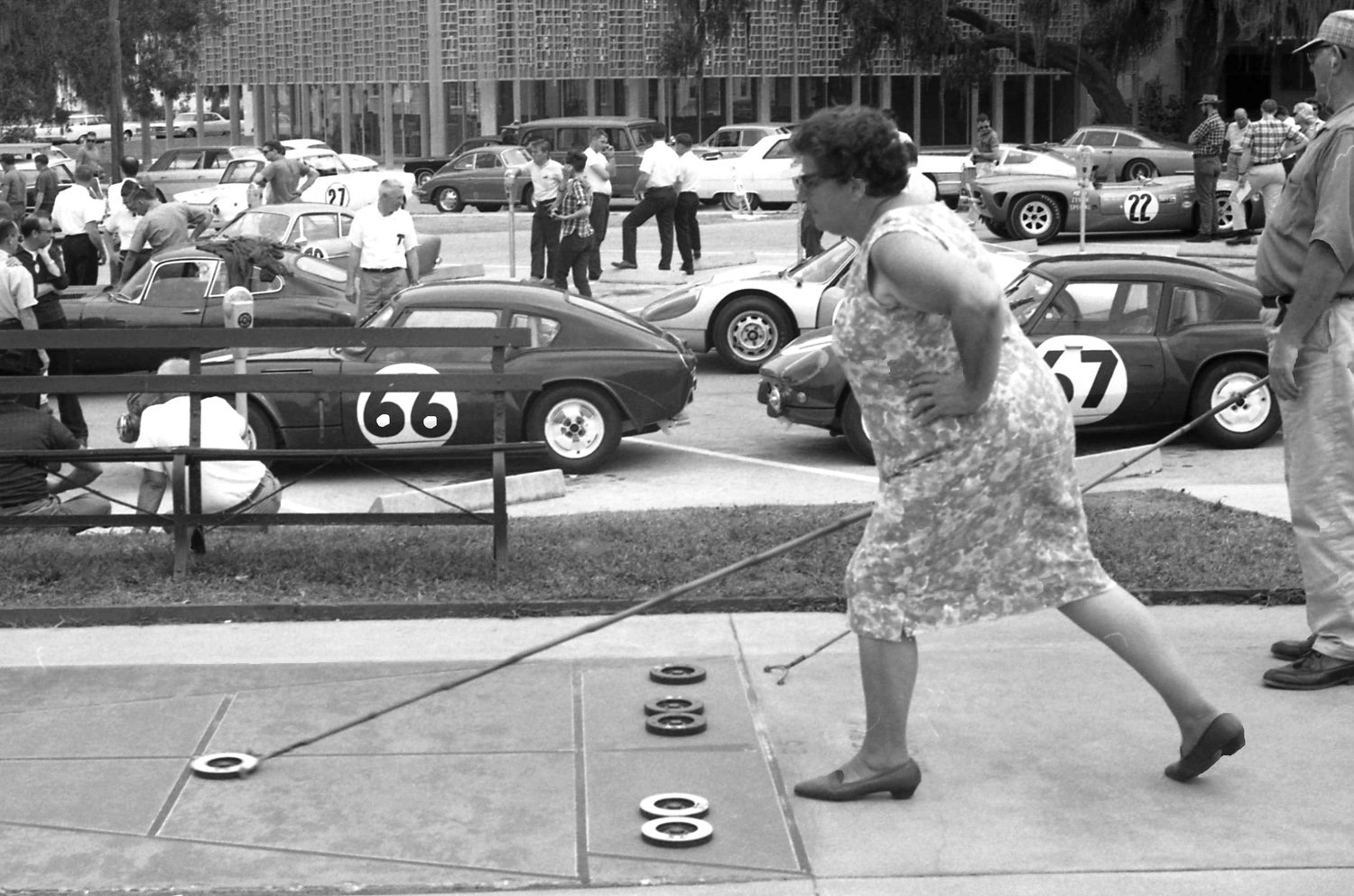
1965: Some parts of Sebring simply accepted the race and went on with their daily lives. Retired folks and shuffleboard were very popular. Note the perfect Olympic form of the woman who is ready to push off.
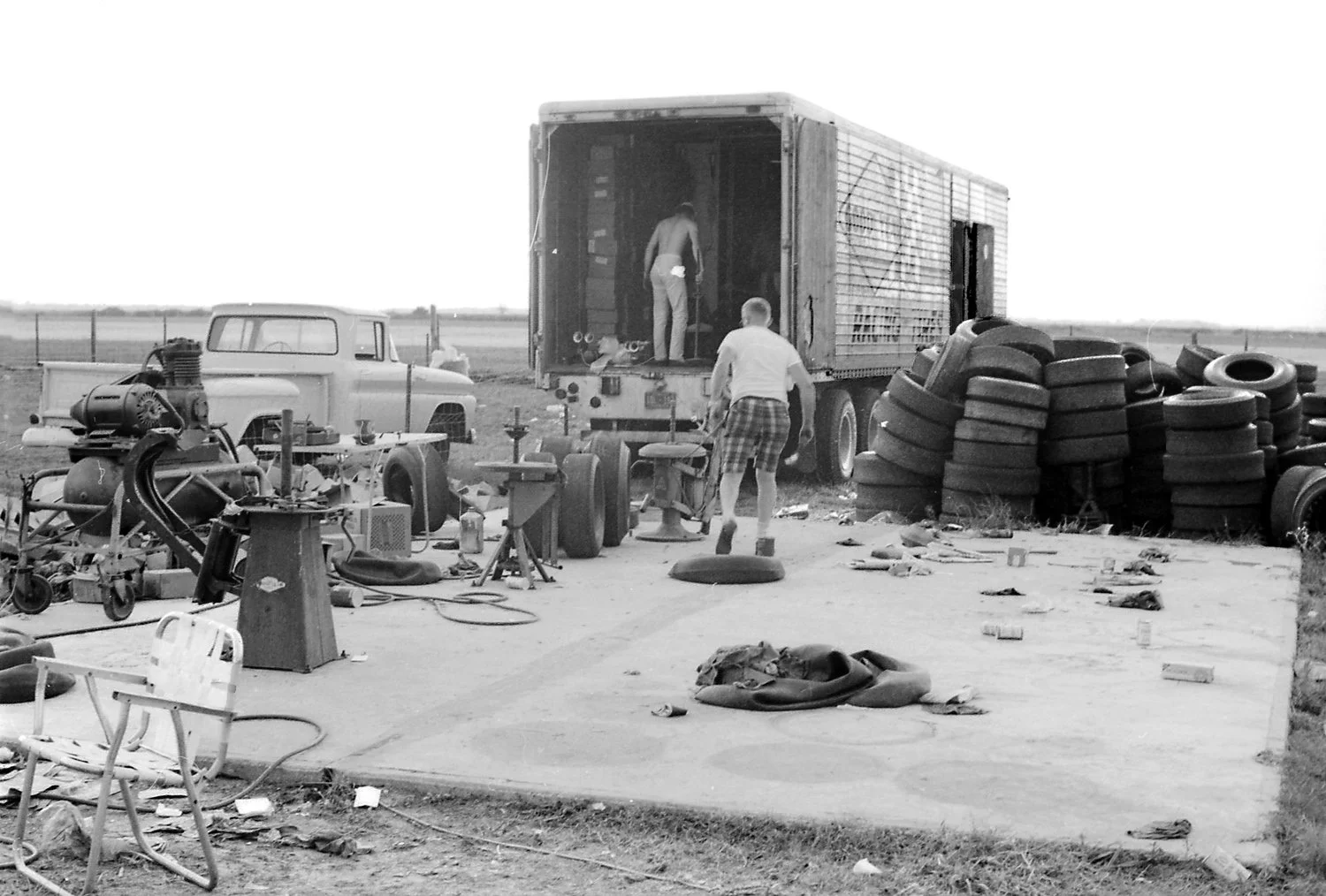
1965: From the start, some of the hardest working people at Sebring were the tire guys. Behind the scenes with the Goodyear Truck. This year heat and torrential rain never stopped them.
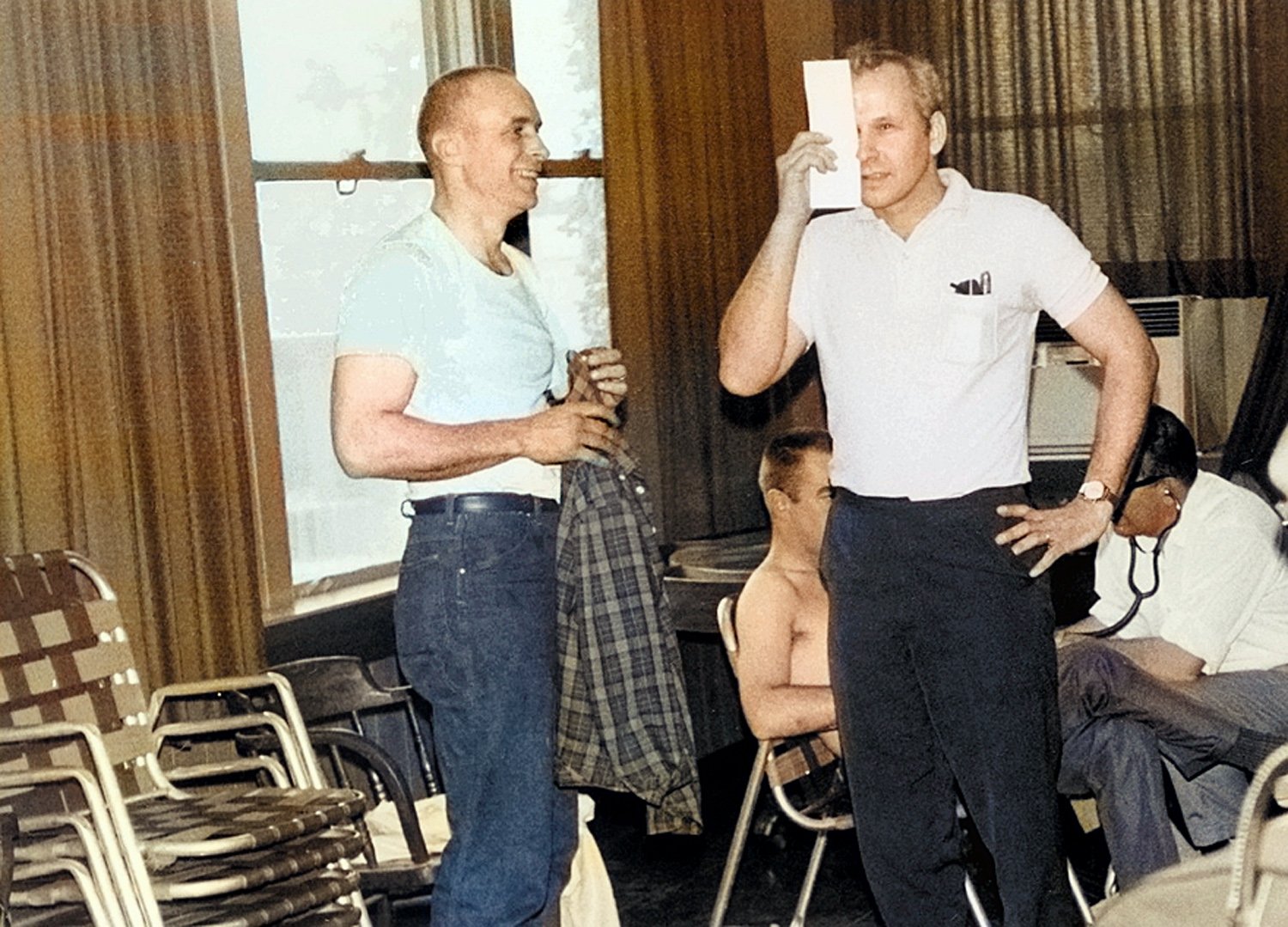
1965: The FIA required checkups on drivers. Oscar Koveleski is reading an eye chart while Sherm Decker laughs. Oscar, no doubt, is telling the doctor that he can only read Polish.
1966: The Florida Governor, Haydon Burns, opens the ceremonies with longtime announcer Ross Stone in his “raceday” sports coat.
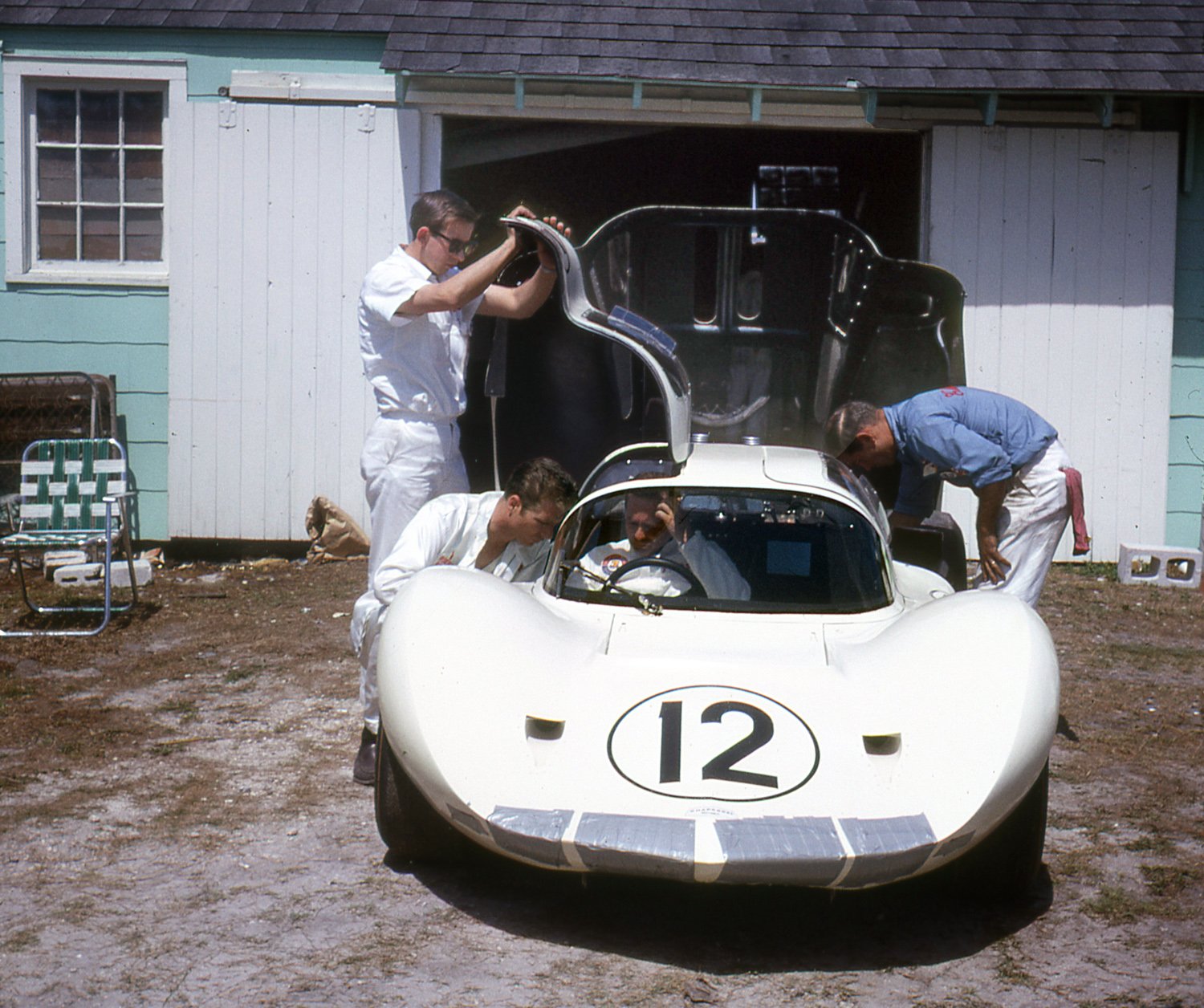
1966: Back in the day even the world class Chaparral team were housed in off track barns or shops. Jim Hall is pointing out something on the 2d coupe to Phil Hill. Chaparral won in 1965 and entered 2 cars for 66. Neither car made it past 35 laps.
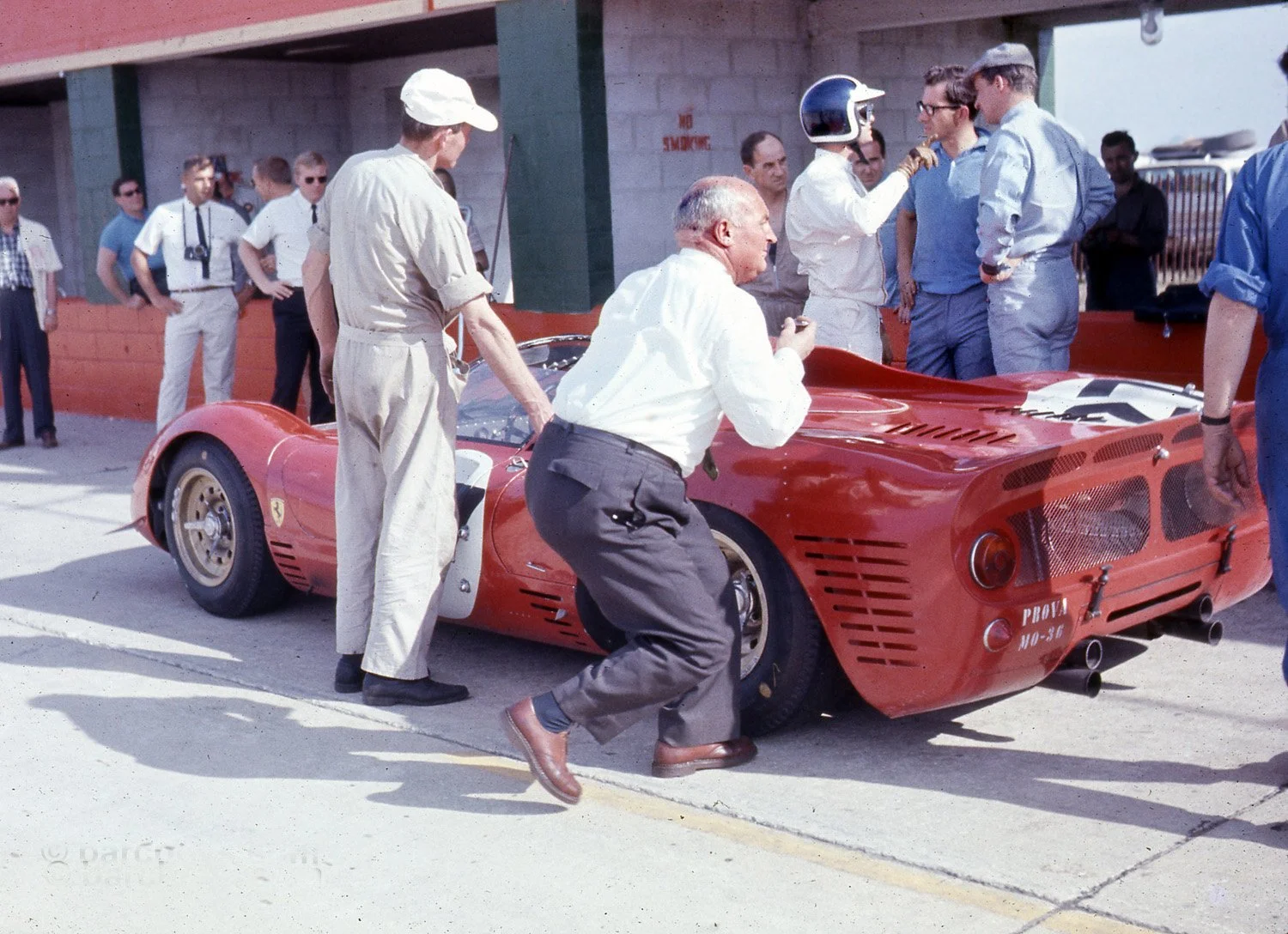
1966: Bob Bondurant (as usual) is explaining the 330P to Mauro Forghieri and Mike Parkes. Note Vic Barlow, competition manager at Dunlop checking his tires. Ferrari switched from Englebert to Dunlop in the late 50’s and used their disc brakes.
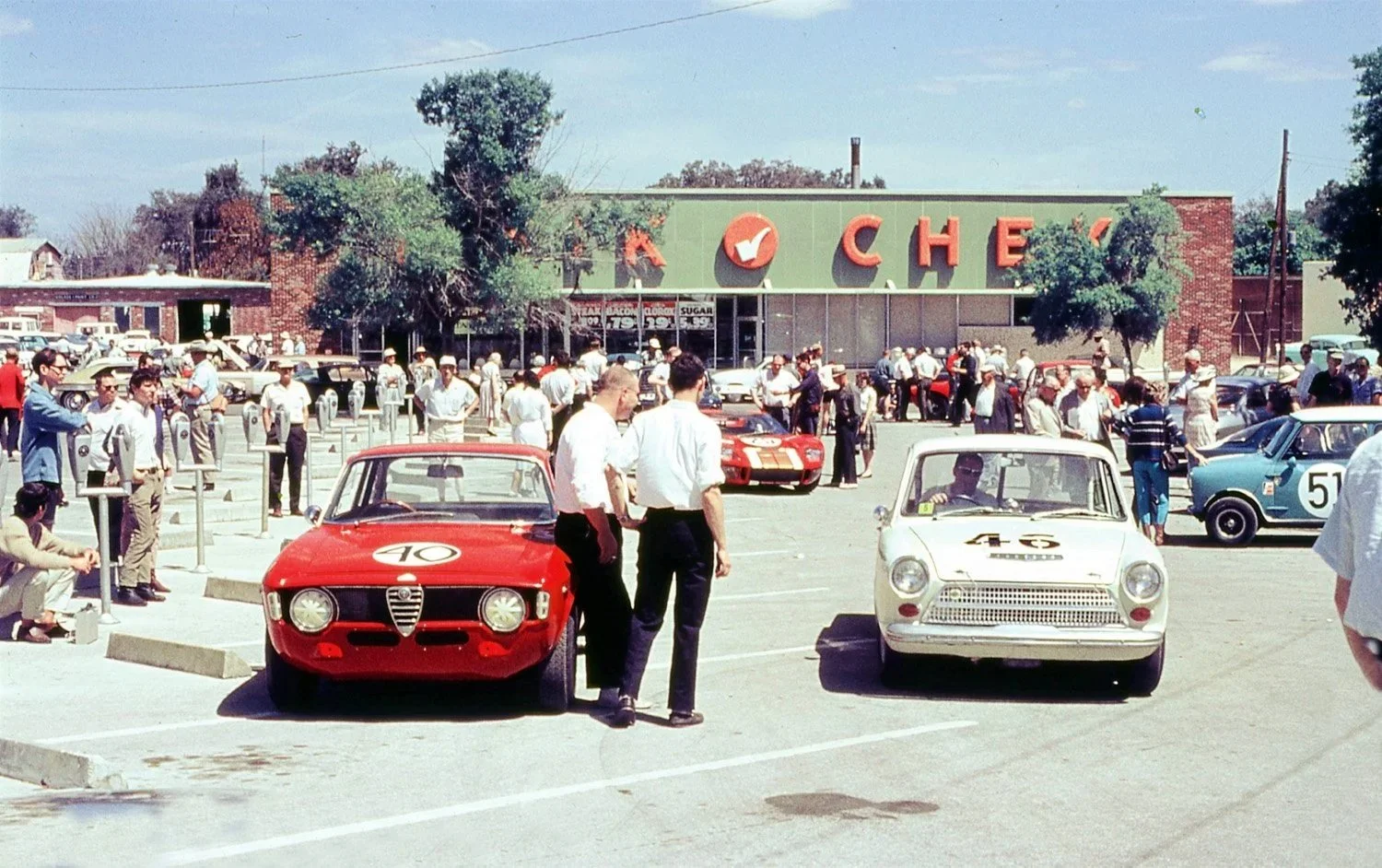
1966: Tech inspection was still held in town and was always a fun time for locals and race crews. At this time everything from a Mini to a Ford GT to a couple U2.5 sedans are waiting.
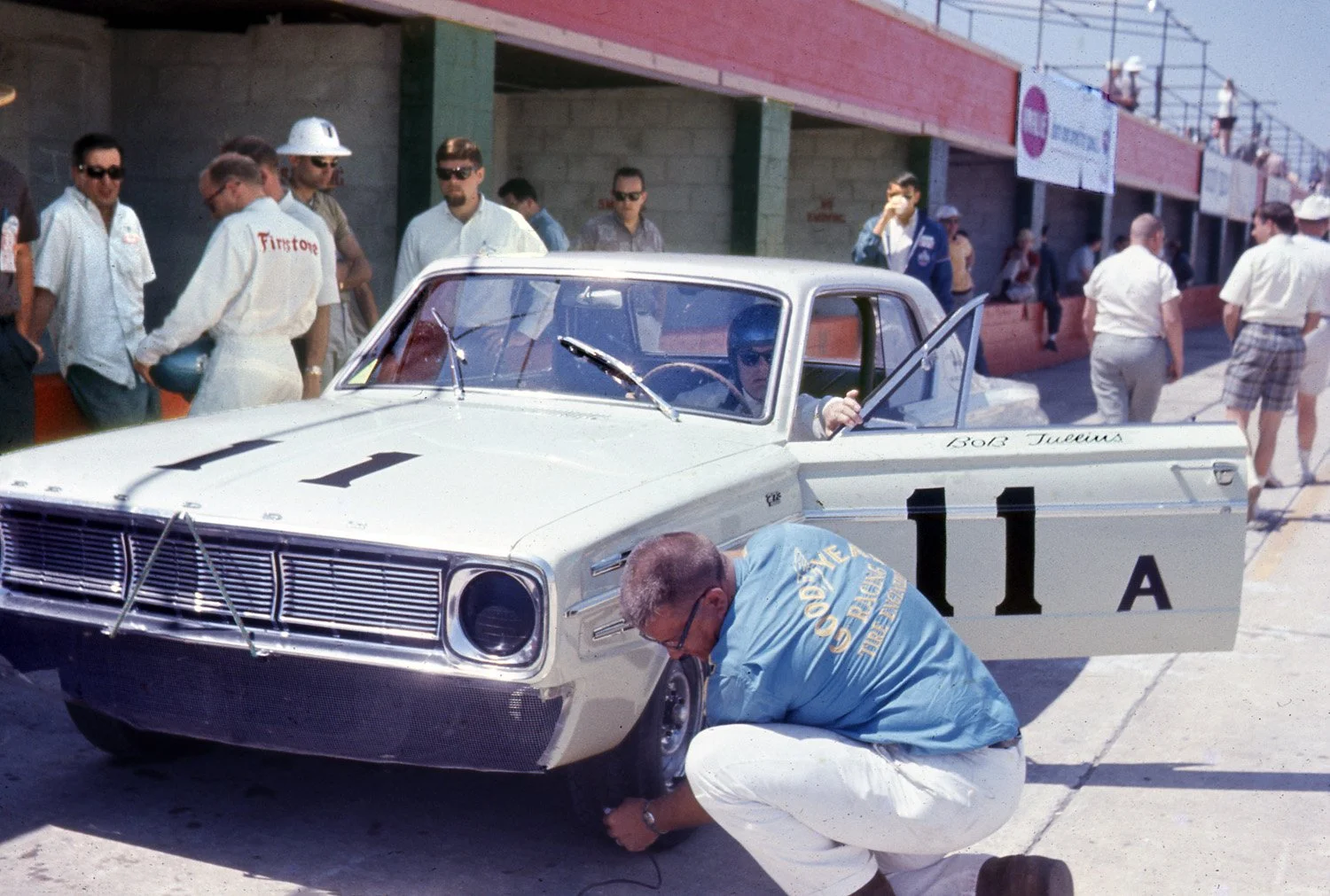
1966: The very first TransAm is held as the 4 hr race at Sebring. A Goodyeartech checks tires during practice. Bob Tullius is in the car as Co Driver Tony Adamowicz (white shirt sunglasses) looks on. They would finish 2nd overall to Rindt’s Alfa.